Last updated on January 9th, 2026 at 06:33 am
Program Overview & Institution Identity
Official Program Name & Location
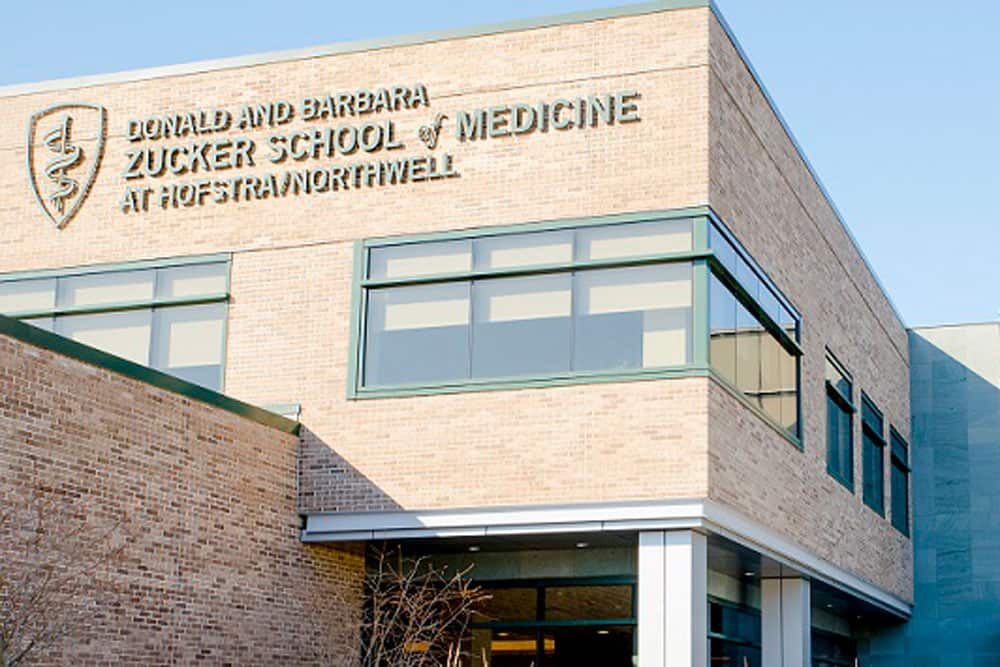
The Donald and Barbara Zucker School of Medicine at Hofstra/Northwell is located in Hempstead, New York, on a suburban campus. Established in 2008 through a unique partnership between Hofstra University and Northwell Health, the school welcomed its first class in 2011, making it one of the nation’s newer medical institutions with a revolutionary approach to medical education.
Program Duration & Structure
The Zucker School of Medicine offers a traditional 4-year MD program with a distinctive curriculum structure. The program features an innovative “First 100 Weeks” approach during the pre-clinical years, comprised of seven integrated courses that blend traditional medical education with early clinical experiences beginning on day one.
Accreditation Status
The school is fully accredited by the Liaison Committee on Medical Education (LCME), the national accrediting body for all U.S. medical schools leading to the MD degree. The school received Full Accreditation status in June 2015 and achieved the full eight-year accreditation term in February 2020, demonstrating its commitment to educational excellence and compliance with national standards.
Ranking & Recognition
The Donald and Barbara Zucker School of Medicine has achieved remarkable recognition in a short time:
- Tier 1 status in U.S. News & World Report 2025 Best Medical Schools rankings for research
- One of only 16 medical schools nationwide to receive this prestigious designation
- One of just two schools in New York State with Tier 1 research ranking
- Ten consecutive years of recognition for strength in medical research
- Tier 3 ranking in Primary Care according to U.S. News & World Report
Unique Features
- Partnership with Northwell Health: Access to over 23 hospital sites throughout New York State
- Feinstein Institutes for Medical Research collaboration: Cutting-edge research opportunities
- Cold Spring Harbor Laboratory partnership: Advanced genetic and genomic research
- Early clinical experiences: EMT training begins in the first eight weeks
- Case-based learning approach: Problem-solving and critical thinking emphasis
Admission Requirements
Academic Prerequisites
Minimum Degree Requirements
All applicants must complete a bachelor’s degree from an accredited U.S. or Canadian college or university prior to matriculation into the MD program.
Citizenship Requirements
Applicants must be U.S. citizens, permanent residents, or hold DACA status. The school does not accept international students who are not permanent residents or DACA recipients.
GPA Requirements
- Median GPA of admitted students: 3.9
- Average GPA: 3.82-3.86 (varies by source)
- While there is no published minimum GPA, successful applicants typically demonstrate strong academic performance with GPAs well above 3.7
Recommended Coursework
The Zucker School of Medicine believes medical education is enriched by diverse intellectual disciplines. While specific prerequisite courses are not explicitly detailed on their website, they seek students with a liberal arts background including courses in:
- Anthropology, history, literature, philosophy
- Political science, psychology, religion, sociology
- Traditional pre-medical sciences (biology, chemistry, physics, mathematics)
Standardized Testing
MCAT Requirements
- Median MCAT score: 518
- Average MCAT score: 515-516
- MCAT score ranges (25th-75th percentile):
- Biological and Biochemical Foundations: 128-130
- Chemical and Physical Foundations: 128-130
- Psychological, Social, and Biological Foundations: 128-130
- Critical Analysis and Reasoning: 126-129
- MCAT validity period: Scores must not be older than 3 years
- Total MCAT score range: Competitive applicants typically score 515 or higher
CASPer Test Requirement
CASPer™ testing is required to assess personal and professional characteristics. Key details:
- Test results are only valid for one admissions cycle
- Applicants who have taken the test in previous years must re-take
- Early Decision deadlines: Final exam date July 21, final score distribution August 1
- Regular Decision deadlines: Final exam date November 14, final score distribution December 1
- Duet is NOT required and will not be reviewed
Letters of Recommendation
- Premedical Committee Letter preferred
- If no committee letter available: Three individual letters required
- Two letters from individual professors (at least one in science)
- One letter from a non-academic professional
- Additional letters beyond the minimum may be submitted but are not guaranteed to be reviewed
Application Process & Timeline
Application System
The Zucker School of Medicine participates in the American Medical College Application Service (AMCAS) for primary applications.
Application Deadlines
- Early Decision Program (EDP): August 1, 2025
- Regular Decision: November 1, 2025
- Secondary application deadline: December 1, 2024
Required Documents
- Primary AMCAS application including:
- Medical College Admission Test (MCAT) scores
- Official transcripts from all post-secondary institutions
- Personal statement and activities descriptions
- Secondary application with $125 fee (waived for AAMC FAP recipients)
- CASPer™ exam completion
- Letters of recommendation (submitted through AMCAS)
Interview Process
The school conducts virtual interviews for competitive applicants. While the specific format isn’t detailed as MMI (Multiple Mini Interview), the admissions process uses a holistic approach to evaluate:
- Academic credentials
- Personal traits and characteristics
- Career objectives
- Ability to contribute to society and the medical profession
Early Decision Program
The school offers an Early Decision Program (EDP) for highly qualified applicants who are certain about their choice:
- Restriction: Applicants may ONLY apply to Zucker School of Medicine
- All materials due: August 1
- Interviews: Conducted in mid-August
- Final decisions: Sent by September 1
- Commitment: Accepted applicants must attend
Admission Statistics & Success Rates
Acceptance Rate & Competitiveness
- Overall acceptance rate: 2.07% (highly competitive)
- Interview invitation rate: 14.84%
- Application volume: Approximately 4,790 applicants for 99 seats
- The school is significantly more competitive than the national average of 4.02%
Class Size & Demographics
- First-year class size: 99 students
- Total enrollment: 400+ students across all four years
- Gender distribution: 43% male, 57% female
- Geographic diversity: Students from 16 states and 47 undergraduate institutions
Residency Preferences
- In-state (New York) preference exists:
- In-state acceptance rate: 4.17%
- Out-of-state acceptance rate: 1.08%
- 64.6% of matriculated students are New York residents
- 35.4% are out-of-state students
Academic Profile of Admitted Students
- Median MCAT: 518
- Median GPA: 3.9
- MCAT range: Typically 515-520+ for competitive applicants
- GPA range: Generally 3.8+ for successful candidates
Waitlist Information
While specific waitlist statistics aren’t publicly available, the highly competitive nature of the school suggests that waitlist movement may be limited.
Tuition & Financial Information
Current Tuition Rates
As a private institution, tuition is the same for all students:
- Annual tuition: $60,075 (2025-2026)
- No difference between in-state and out-of-state students
Additional Fees
- Secondary application fee: $125 (waived for AAMC FAP recipients)
- Additional fees for technology, student services, and health insurance (specific amounts not detailed)
Total Cost of Attendance
- Four-year program total: Approximately $240,300 in tuition alone
- Additional expenses: Housing, meals, books, transportation, and personal expenses
- Living costs in Hempstead, NY: Moderate compared to Manhattan but higher than national averages
Financial Aid Options
While specific financial aid programs aren’t detailed in the search results, as an accredited medical school, students are eligible for:
- Federal student loans and aid programs
- Merit-based scholarships (availability varies)
- Need-based financial aid
- Work-study opportunities may be available
Cost Comparison
The tuition is competitive with other private medical schools in the Northeast, particularly given the school’s high ranking and unique clinical training opportunities through Northwell Health.
Click To See Hundreds Of Consultants Who Can Mentor You:


Curriculum & Program Structure
Educational Philosophy
The Zucker School of Medicine has revolutionized medical education with several key principles:
- Student-centered learning over traditional teaching methods
- Case-based learning and problem-solving emphasis
- Early clinical experiences beginning day one
- Integration of technology and simulation-based learning
- Holistic approach combining academic rigor with humanism
Pre-Clinical Years: “First 100 Weeks”
The innovative curriculum structure includes:
- Seven integrated courses: CPR (Cardiopulmonary Resuscitation), BI (Basic Immunology), FTB (From Tissue to Bedside), HOM (Human Organ and Medicine), and others
- EMT training: Eight-week emergency medical technician certification program
- PEARLS program: Problem-based learning approach
- Early patient interactions: Meaningful clinical experiences from the start
Clinical Training
- Partnership with Northwell Health: Access to 23+ hospital sites
- Geographic distribution: Clinical sites throughout New York State including NYC and Long Island
- Core rotations: Traditional clinical specialties with innovative teaching methods
- Acting internships: Fourth-year students assume increased responsibilities
Special Programs & Dual Degrees
The school offers several combined degree options:
- BS/MD program: 4+4 undergraduate/medical degree pathway
- MD/PhD: Research-intensive dual degree
- MD/MBA: Medical and business administration combination
- MD/MPH: Medical and public health degrees
Research Opportunities
- 70% of students participate in research after their first year
- Nearly all students engage in research by graduation
- Feinstein Institutes collaboration: Cutting-edge biomedical research
- Cold Spring Harbor Laboratory partnership: Genetics and genomics research
Assessment Methods
The school emphasizes learning over traditional testing, using assessment methods designed to drive educational outcomes rather than simple memorization.
Pre-Medical Preparation
Undergraduate Program Recommendations
The Zucker School of Medicine values diverse academic backgrounds and actively seeks students with liberal arts education alongside scientific preparation. While science courses are essential, the school appreciates students who have studied:
- Literature, philosophy, and humanities
- Social sciences and psychology
- History and political science
- Fine arts and creative disciplines
Academic Planning Strategy
GPA Optimization:
- Maintain a GPA of 3.8 or higher for competitive standing
- Balance challenging coursework with achievable excellence
- Consider both overall and science GPA performance
Course Sequencing:
- Complete fundamental science requirements early
- Allow time for MCAT preparation during or after completion of prerequisites
- Include diverse coursework to demonstrate intellectual breadth
Clinical Experience Requirements
While specific hour requirements aren’t published, successful applicants typically have:
- Meaningful clinical exposure through volunteering or employment
- Direct patient interaction experience
- Understanding of healthcare systems and challenges
- Service to underserved populations
Research Experience
Given the school’s Tier 1 research ranking:
- Research experience highly valued but not absolutely required
- Quality over quantity in research involvement
- Publications or presentations strengthen applications
- Basic science, clinical, or public health research all considered valuable
Extracurricular Activities
The school’s holistic admissions approach values:
- Leadership experience in various settings
- Community service and volunteering
- Diverse interests and experiences
- Long-term commitments rather than just resume padding
MCAT Preparation
- Target score: 515 or higher for competitive standing
- Median score: 518 among accepted students
- Preparation timeline: Allow 3-6 months for dedicated study
- Retake considerations: Schools accept scores up to 3 years old
Timeline for Application
Junior Year:
- Complete prerequisite coursework
- Begin MCAT preparation
- Engage in meaningful clinical and research experiences
Senior Year or Gap Year:
- Take MCAT (spring or summer recommended)
- Complete AMCAS application
- Submit secondary applications promptly
- Prepare for CASPer exam
Match Results & Residency Preparation
Match Statistics
The Zucker School of Medicine has achieved impressive residency placement results:
- 2025 Match Day: 102 graduating students matched
- Geographic distribution: 17 states represented
- Specialty diversity: 21 different specialties
- Northwell Health placements: 24 students matched within the health system
- Couples matching: 3 couples successfully matched
USMLE Performance
While specific pass rates aren’t published, the school’s graduates demonstrate strong performance on national examinations, as evidenced by successful residency placement rates.
Career Support
The school provides comprehensive support for residency applications and career planning, helping students navigate the competitive residency match process.
Frequently Asked Questions
Does the Zucker School of Medicine accept international students?
No, applicants must be U.S. citizens, permanent residents, or hold DACA status.
What is the Zucker School of Medicine’s average GPA and MCAT score?
The median GPA is 3.9 and median MCAT is 518 for accepted students.
How competitive is the Zucker School of Medicine?
Extremely competitive with a 2.07% acceptance rate, making it one of the most selective medical schools in the nation.
Does the school prefer New York residents?
Yes, there is a clear in-state preference with 64.6% of the class consisting of New York residents and higher acceptance rates for in-state applicants.
When should I apply to the Zucker School of Medicine?
Submit your AMCAS application early in the cycle (June-July) and complete secondary applications promptly by the November 1 deadline.
What clinical experience do I need?
While specific hour requirements aren’t published, meaningful clinical exposure through volunteering, employment, or shadowing is essential.
Does the school require research experience?
Research is not strictly required but highly valued, especially given the school’s Tier 1 research ranking.
How many letters of recommendation are required?
A premedical committee letter is preferred, or three individual letters (two from professors, one non-academic professional).
What makes the Zucker School of Medicine different?
The innovative “First 100 Weeks” curriculum, early clinical experiences beginning day one, partnership with Northwell Health, and emphasis on case-based learning.
How much does the Zucker School of Medicine cost?
Annual tuition is $60,075, with the same rate for all students regardless of residency status.
What financial aid is available?
Students are eligible for federal loans and aid programs, with potential merit-based scholarships and need-based assistance.
What is the interview format?
The school conducts virtual interviews using a holistic evaluation approach, though the specific format (traditional vs. MMI) isn’t clearly specified.
Where do graduates match for residency?
Graduates match across 21 specialties in 17 states, with 24 students matching at Northwell Health in 2025.
Does the school offer combined degree programs?
Yes, including BS/MD, MD/PhD, MD/MBA, and MD/MPH programs.
What is the curriculum structure like?
The innovative curriculum features integrated courses, early clinical experiences, case-based learning, and a unique “First 100 Weeks” approach to pre-clinical education.
The Donald and Barbara Zucker School of Medicine at Hofstra/Northwell represents a revolutionary approach to medical education, combining academic excellence with innovative teaching methods and unparalleled clinical training opportunities through its partnership with Northwell Health.