

Last updated on March 13th, 2026 at 06:28 am

Table of Contents
Understanding MSAR Data: Beyond the Median GPA/MCAT
Most applicants open the MSAR (Medical School Admission Requirements), look at the median MCAT, and if they are within two points, they add the school to their list. In 2026, that is not enough. To be competitive, you need to look at the tails of the distribution.
- The 10th Percentile Rule: If your MCAT or GPA is below a school’s 10th percentile, your application is likely to be “screened out” by an algorithm before a human ever sees it. Unless you have a massive “X-factor” (military service, Olympic athlete, or a first-author publication in a major journal), avoid schools where you are below the 10th percentile.
- The “Waitlist Movement” Tab: MSAR now provides data on how many people are accepted off the waitlist. If a school has a high median but moves deep into its waitlist every year, it’s a more “attainable” target than a school with the same stats that rarely budges.
- The “Experiences” Breakdown: Don’t just look at grades. Look at the percentage of the entering class that had “Clinical Volunteering” vs. “Lab Research.” If 95% of a school’s class has heavy research and you have zero, you are not a fit—even if your 522 MCAT is perfect.
Once you’ve used MSAR to identify your target score, you need a plan to get there. Whether you’re aiming for a 510 or a 520, our MCAT Study Guide breaks down the study schedules and resources used by top-scoring applicants
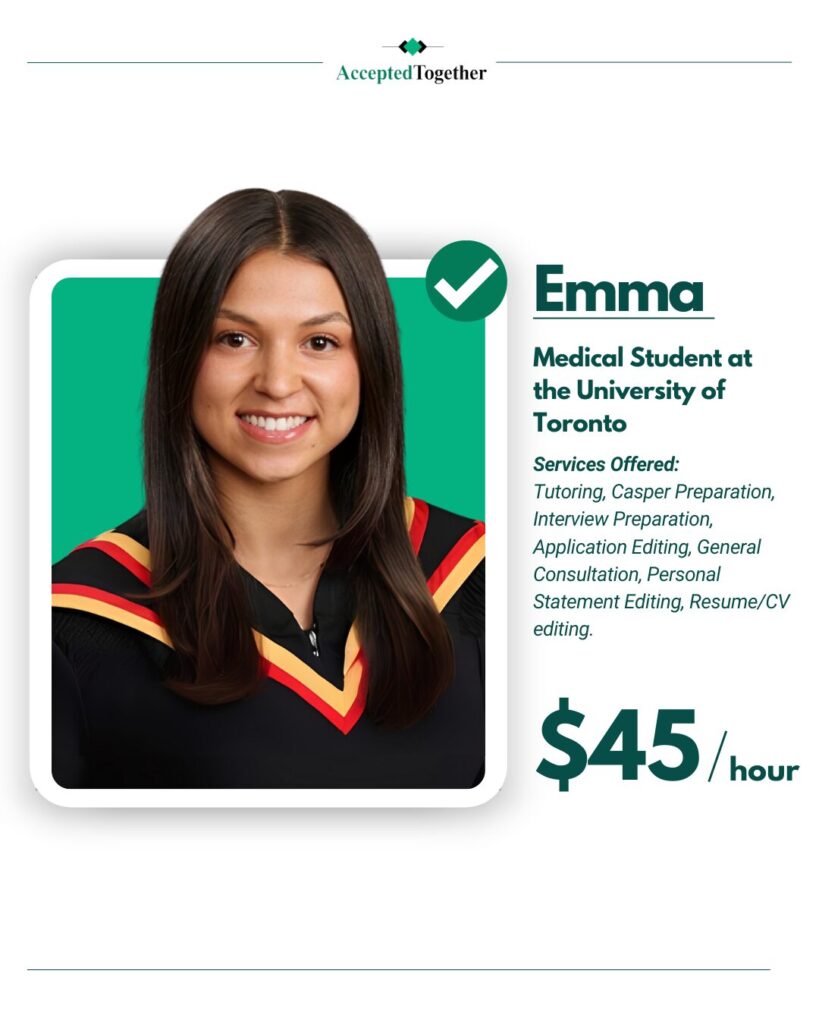
Click to see hundreds of consultants who can mentor you:

Reach, Target, and Undershoot: Creating a Balanced List
In 2026, the national acceptance rate for MD schools is hovering around 42%. To beat those odds, your list of 25–30 schools should follow a “Pyramid Strategy”:
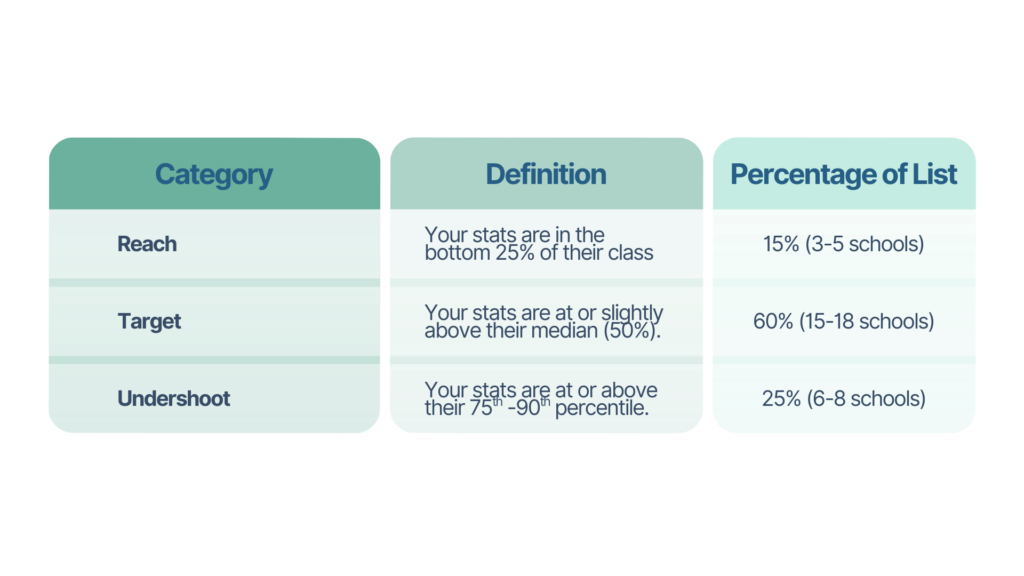
Pro Tip: Your “Undershoot” schools should still be places you would actually attend. Never apply to a school you’d be unhappy at just because it’s a “safety.”
Geographic Preference and “In-State” Bias

Residency status is the “Invisible Wall” of U.S. admissions. Many state-funded schools are legally mandated to fill 75% to 90% of their seats with residents from their own state.
- Public Schools: If you are a California resident applying to the University of Washington, your 520 MCAT might not be enough because they prioritize the WWAMI region (Washington, Wyoming, Alaska, Montana, Idaho). Always prioritize your own state schools first.
- Out-of-State (OOS) Friendly: Use the MSAR to filter for “Percentage of Out-of-State Matriculants.” Schools like Tulane, Jefferson (SKMC), and Georgetown are private and treat everyone equally regardless of geography.
- The “Ties” Factor: If you are applying to a state school where you aren’t a resident, use your secondary essay to mention “Significant Ties.” Did you grow up there? Do you have family there? If not, it’s a hard uphill battle.
WARS vs. LizzyM Score: Which Should You Use in 2026?
Two major systems exist to help you quantify your “competitiveness.” Here is how to use them this year:
The LizzyM Score
Formula: (GPA×10)+(MCAT/10)
- Best For: A quick “vibe check” of your stats. It tells you if you are academically qualified for a school’s “stats box.”
- The Flaw: It ignores your 2,000 hours of EMT work and your three years of research. In a 2026 holistic review environment, LizzyM is often too simplistic.
WARS (WedgeDawg’s Applicant Rating System)
Formula: A complex point system that assigns “levels” based on Undergrad Prestige, Research, Clinical Experience, Shadowing, and Leadership.
- Best For: Building your actual school list. WARS categorizes schools into “tiers” (Tier 1 being Harvard/Hopkins, Tier 5 being newer or less research-heavy schools).
- Why it wins in 2026: It rewards students who have “Distance Traveled”—those who worked through college or had non-traditional paths—which is exactly what admissions committees are looking for right now.
Looking to see where you stand? Once you’ve used our AMCAS and OMSAS GPA Calculators to get your official stats, plug those numbers into the formulas above to begin building your school list.
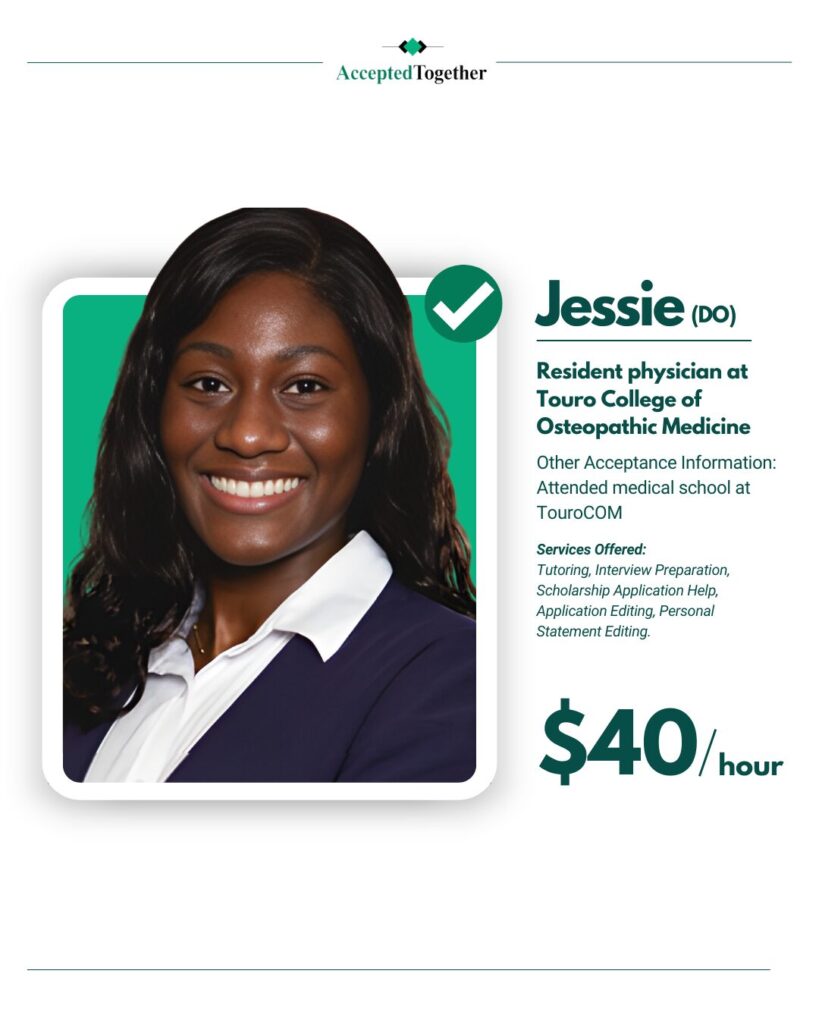
Click to see hundreds of consultants who can mentor you:

2026 School Selection Frequently
Asked Questions
The average successful applicant applies to 20–30 schools. Applying to fewer than 15 is high-risk unless you are a top-tier candidate. Applying to more than 35 usually results in poor-quality secondary essays due to burnout.
To an extent, yes. If you want a hyper-competitive specialty like Neurosurgery or Dermatology, attending a “Top 20” research school helps. However, for 90% of doctors, where you go is less important than how well you do once you are there.
You should have a “Primary List” finalized by May 1, 2026. This gives you time to look up their specific secondary prompts and start pre-writing before the June rush.
Yes. If your goal is to be a doctor, having 3–5 DO schools on your list is a smart insurance policy. Many DO programs have incredible clinical training and lower tuition than out-of-state private MD schools.