Last updated on January 9th, 2026 at 06:34 am
Program Overview & Institution Identity
Official Program Name
Alice L. Walton School of Medicine (AWSOM) is a nonprofit medical school located in Bentonville, Arkansas. Founded in 2021 by philanthropist Alice Walton, the world’s richest woman and Walmart heir, AWSOM represents a revolutionary approach to medical education that integrates traditional medical training with whole-health principles.
Program Duration
AWSOM offers a 4-year Doctor of Medicine (MD) program that welcomed its inaugural class of 48 students in July 2025. The curriculum follows an innovative structure known as ARCHES, which integrates six core elements throughout all four years: Art of Healing, Research, Clinical Care, Health Systems Science, Embracing Whole Health, and Science of Medicine.
Location and Campus Details
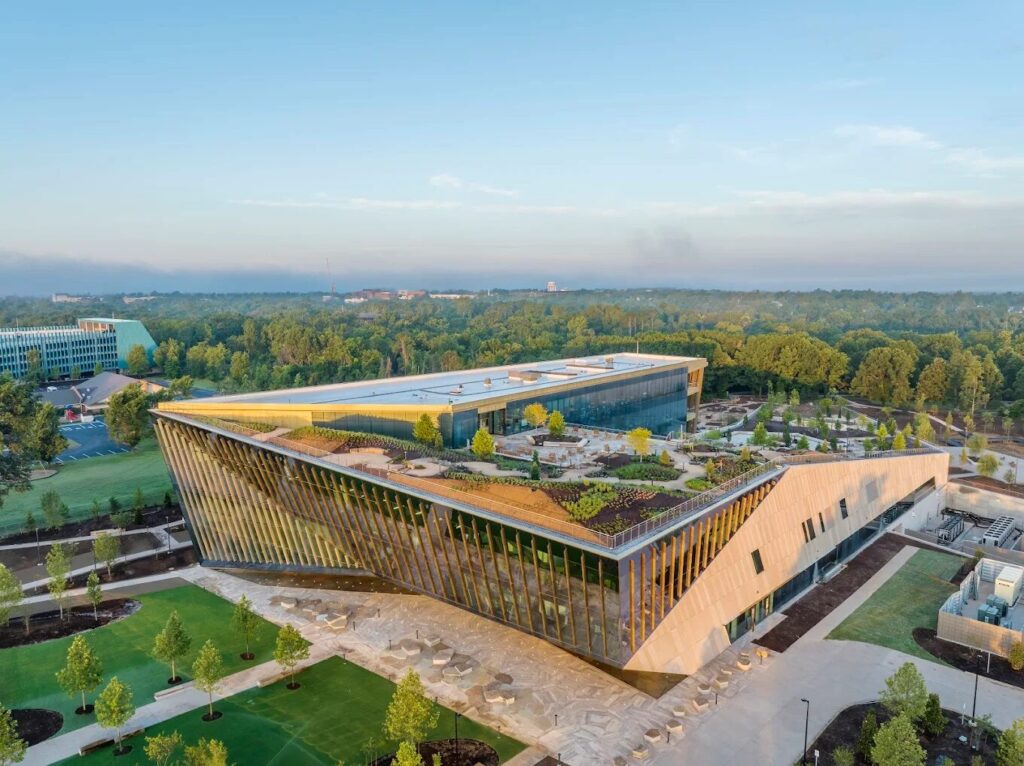
Located in Bentonville, Arkansas on a suburban campus, AWSOM features a state-of-the-art 154,000-square-foot, four-story facility designed by Polk Stanley Wilcox Architects. The campus includes healing gardens, a rooftop park, glass walls, wellness studios, simulation rooms, anatomy labs, and learning halls. The school shares a campus with Crystal Bridges Museum of American Art, providing unique opportunities for students to explore the intersection of arts and medicine.
Accreditation Status
AWSOM achieved preliminary accreditation from the Liaison Committee on Medical Education (LCME) in October 2024, meeting all 12 required standards. Students graduating from a medical school with preliminary accreditation are considered graduates of an accredited institution and are eligible for graduate medical education and medical licensure. The school is planning its next LCME site visit for academic year 2026-27 to pursue provisional accreditation, followed by full accreditation evaluation in 2029-30.
Ranking and Recognition
As a newly established medical school (2021), AWSOM does not yet have traditional rankings from U.S. News & World Report. However, the school has gained significant recognition for its innovative whole-health approach to medical education and its unique tuition-free model for the first five cohorts.
Admission Requirements
2.1 Academic Prerequisites
Minimum Degree Requirements
Applicants must hold a bachelor’s degree from an accredited institution. The school requires completion of minimum 24 credit hours in Biology-Chemistry-Physics-Math (BCPM) courses.
Required Courses
AWSOM requires a minimum of 24 credit hours in BCPM subjects, but does not specify individual prerequisite courses. Advanced Placement (AP) and International Baccalaureate (IB) coursework will not count toward the required credit hour total.
GPA Requirements
- Minimum overall GPA of 3.4 is required for admission
- BCPM GPA requirements (one of the following must be met):
- Cumulative undergraduate BCPM GPA of 3.4 with at least 24 credit hours in math and sciences, OR
- Cumulative post baccalaureate BCPM GPA of 3.5 with at least 24 credit hours in math and sciences, OR
- Cumulative graduate BCPM GPA of 3.5 with at least 24 credit hours in math and sciences
2.2 Standardized Testing
MCAT Requirements
- Minimum MCAT score of 500 (total score)
- MCAT must be taken within four years of matriculation date
- As a new school, average MCAT scores for admitted students are not yet available
Additional Testing
- PREview® Score is highly recommended (not required)
- PREview is a situational judgment test that assesses pre-professional competencies
2.3 Extracurricular Activities & Experience Requirements
AWSOM utilizes a holistic review process evaluating experiences, personal attributes, and academic preparation. Successful applicants demonstrate:
- Strong commitment to serving others and the community
- Meaningful exposure to and understanding of the medical profession
- Team and leadership skills
- Demonstrated ability to perform well in an academic setting
Residency Requirements
- Applicants must be U.S. Citizens or Permanent Residents
- The school accepts both in-state and out-of-state applicants
Application Process & Timeline
Application System
AWSOM participates in the American Medical College Application Service (AMCAS) for primary applications.
Application Process Steps
Step 1: Submit primary application through AMCAS
- Applicants are encouraged to submit materials in advance of deadlines
Step 2: Secondary Application
- Applicants who meet minimum requirements receive email instructions for the electronic secondary application
- $100 nonrefundable application fee required upon submission
Step 3: Holistic Review
- AWSOM completes holistic review of all application materials
- Selected applicants are invited to register for virtual interview days
Step 4: Admission Decisions
- Admissions offered on rolling basis until class of 48 is filled
- All decisions communicated via email and updated in AWSOM admissions portal
Application Deadlines
- Primary Application Deadline: November 1, 2025 (for 2026 entry)
Required Documents
- Letters of Recommendation: 3-5 letters required if invited for secondary application
- Alternative: One committee letter from premedical advising office
- All letters must be submitted through AMCAS Letter Service
Secondary Application Essays (2025-2026)
1500 character limit each:
- Describe how AWSOM’s mission and values align with your personal and professional goals. Please include how you believe AWSOM will help you develop into the kind of person and physician you hope to become.
- What unique qualities or individual lived experiences do you possess that make you uniquely suited to become a physician?
- Describe your experiences engaging in the community, and how those experiences have prepared you for a future as a physician.
- Trust and rapport are essential in your day-to-day interactions with people. How do you cultivate a relationship with a person who may be very different from you?
- How do you practice whole health in your personal life, and how do you aspire to incorporate whole health principles when caring for the community?
- Optional: Gap year explanation if applicable
- Optional: Additional information not included elsewhere in your application
Interview Process
- Format: Virtual interview days
- Interview invitations extended to selected applicants following holistic review
- Specific interview format details (traditional vs. MMI) not publicly disclosed
Admission Statistics & Success Rates
Overall Acceptance Rate
For the inaugural class entering in 2025, AWSOM admitted less than 3% of over 2,000 applicants, making it extremely competitive among medical schools.
Class Size
- 48 students per incoming class
- Small class size allows for personalized attention and strong faculty-student relationships
Application Volume
- Over 2,000 applications received for the inaugural class
- High application volume reflects significant interest in the school’s innovative approach
Academic Statistics
As a new school, comprehensive statistics for MCAT scores and GPAs of admitted students are not yet publicly available. However, given the competitive acceptance rate and rigorous standards, successful applicants likely exceed the minimum requirements significantly.
Student Demographics
The inaugural class includes students from diverse backgrounds, representing both Arkansas towns and major cities nationwide, reflecting AWSOM’s commitment to diversity and inclusion.
Tuition & Financial Information
Revolutionary Tuition Model
Alice L. Walton School of Medicine will waive tuition for the first five cohorts of students. This unprecedented offer makes AWSOM one of the few tuition-free medical schools in the United States.
Estimated Costs (After Tuition Waiver)
| Year | M1 (11 months) | M2 (11 months) | M3 (11 months) | M4 (9 months) |
|---|---|---|---|---|
| Regular Tuition | $69,650 | $69,650 | $69,650 | $69,650 |
| Tuition Waiver | ($74,198) | ($72,063) | ($71,963) | ($72,063) |
| Net Tuition Cost | $0 | $0 | $0 | $0 |
Additional Required Expenses
Mandatory Fees:
- Student Association/Activity, Technology, Diagnostic Equipment, Research: $2,360 (M1), $225 (M2), $125 (M3), $225 (M4)
Health and Insurance:
- Health and Disability Insurance: $4,578 annually for M1-M3, $4,578 for M4
Educational Materials:
- Books, Course Materials, Supplies and Equipment: $1,500 annually
Living Expenses:
- Housing, Food, Transportation, Miscellaneous: $32,355 (M1-M2), $35,587 (M3), $26,452 (M4)
Professional Fees:
- Licensure, Certification, Credentials: $0 (M1), $1,305 (M2-M3), $4,750 (M4)
Total Estimated Cost of Attendance (After Tuition Waiver)
- M1: $36,245
- M2: $37,550
- M3: $40,782
- M4: $35,092
- 4-Year Total: Approximately $149,669
Financial Aid
- Ann Lockridge serves as Director of Financial Aid
- Contact: FinAid@alwmed.org
- Additional financial aid opportunities available beyond the tuition waiver
Click To See Hundreds Of Consultants Who Can Mentor You:
Curriculum & Program Structure
Program Duration and Structure
AWSOM offers a 4-year MD program using the innovative ARCHES curriculum, which integrates six core elements longitudinally throughout all courses, clerkships, and electives.
Educational Philosophy: ARCHES Framework
Art of Healing
- Focuses on human dimensions of care merging humanities and arts with medicine
- Advanced communication, observational and listening skills
- Ethics, professionalism, and professional identity development
- Cultural aspects of healing and creative arts therapies
- Unique partnership with Crystal Bridges Museum of American Art
Research
- Basic principles of research and evidence-based medical practice
- Skills for locating, analyzing, synthesizing, and applying medical literature
- Development of life-long learning practices
- Required unique scholarly project with mentorship support
Clinical Care
- Early Clinical Experience (ECE) starting in first year
- Emphasis on whole health principles and comprehensive clinical skills
- Communication, history-taking, physical exams, clinical reasoning
- Preventive care, diagnostics, therapeutics, and procedural skills
- Simulation-based learning before third-year clerkships
Health Systems Science
- Current healthcare systems and delivery models
- Population health, healthcare policy, and quality improvement
- Healthcare economics and healthcare informatics
Embracing Whole Health
- Over 50 hours of nutrition training (double the national average)
- Culinary classes, gardening, and teaching farm experiences
- Mental, emotional, social, and lifestyle factors in health
- Community service begins by third day on campus
Science of Medicine
- Traditional medical sciences foundation
- Integration with innovative teaching methods
- Technology-enhanced learning experiences
Teaching Methods
- Problem-Based Learning (PBL)
- Case-based learning
- Small group activities
- Simulation-based training
- Technology integration
- Team-Based Learning (TBL)
Clinical Training
- Early clinical exposure beginning first year
- Third-year core clerkships
- Fourth-year electives and specialty rotations
- Clinical partnerships (specific partners not yet disclosed as school is new)
Special Features
- Academic Houses: Small cohort system for personalized support
- Physician Mentors: Individual coaching and mentorship
- Wellness Integration: Self-care and well-being emphasized throughout curriculum
- Arts Integration: Unique partnership with Crystal Bridges Museum
Residency Preparation
As a new school, match rates and residency placement statistics are not yet available. However, the school is designed to prepare students for competitive residency applications through:
- Strong academic foundation
- Research opportunities and scholarly projects
- Leadership and service experiences
- Close faculty mentorship for strong letters of recommendation
Pre-Medical Preparation
Academic Planning
Undergraduate Major Recommendations:
- AWSOM values diverse academic backgrounds
- Any major acceptable as long as BCPM requirements are met
- Liberal arts backgrounds welcomed and encouraged
Course Sequencing:
- Complete 24 credit hours in BCPM subjects
- Focus on achieving strong GPAs (3.4+ overall, 3.4-3.5+ BCPM)
- Balance science requirements with diverse academic interests
Clinical Experience
Types valued by AWSOM:
- Direct patient care experience
- Healthcare shadowing across diverse settings
- Volunteer work in healthcare environments
- Community health initiatives
Quality over Quantity:
- Meaningful, sustained experiences preferred
- Understanding of healthcare challenges and opportunities
- Exposure to whole-health approaches when possible
Research Experience
- Not explicitly required but valuable for scholarly project preparation
- Types valued: Basic science, clinical, public health, health policy
- Focus on curiosity, inquiry, and critical thinking development
Extracurricular Planning
Essential Experiences:
- Community Service: Strong emphasis on service to others
- Leadership: Team leadership and initiative-taking opportunities
- Whole Health Exposure: Experiences with wellness, nutrition, mental health
- Arts and Humanities: Creative experiences valued given curriculum focus
Standardized Test Preparation
MCAT Preparation:
- Target score well above minimum 500 (given <3% acceptance rate)
- Focus on balanced performance across all sections
- Consider retaking if below competitive range
- Valid for 4 years from matriculation date
PREview Preparation:
- Highly recommended though not required
- Situational judgment test assessing pre-professional competencies
- Practice scenarios involving ethical decision-making
Application Timeline Planning
Recommended Timeline:
- Junior Year: Begin MCAT preparation, complete prerequisites
- Senior Year: Take MCAT, complete AMCAS application
- Gap Year Considerations: Valuable for additional experiences, not discouraged
Frequently Asked Questions
Does Alice L. Walton School of Medicine look at extracurriculars?
Yes, AWSOM uses a holistic review process that heavily weighs extracurricular experiences. They specifically look for commitment to serving others, meaningful medical exposure, leadership skills, and community engagement.
What is Alice L. Walton School of Medicine’s average GPA and MCAT score?
As a new school, specific averages are not yet available. However, minimum requirements are 3.4 overall GPA and 500 MCAT, but given the <3% acceptance rate, successful applicants likely score significantly higher.
How competitive is Alice L. Walton School of Medicine compared to other medical schools?
AWSOM is extremely competitive with an acceptance rate of less than 3% (compared to national average of ~7%). However, it’s important to note this may be inflated due to the school’s newness and publicity around free tuition.
Does Alice L. Walton School of Medicine prefer in-state applicants?
No strong in-state preference has been indicated. The inaugural class includes students from both Arkansas and major cities nationwide, indicating geographic diversity is valued.
What makes Alice L. Walton School of Medicine different from other medical schools?
Key differentiators include: tuition-free education for first five cohorts, ARCHES curriculum integrating whole health principles, partnership with Crystal Bridges Museum, emphasis on arts and humanities, over 50 hours of nutrition training, and focus on preventive care.
When should I apply to Alice L. Walton School of Medicine?
AMCAS primary applications should be submitted well before the November 1 deadline. Apply as early as possible in the cycle (June-July) for best consideration.
Does Alice L. Walton School of Medicine accept international students?
No, AWSOM only accepts U.S. Citizens and Permanent Residents.
What clinical experience do I need for Alice L. Walton School of Medicine?
While specific hour requirements aren’t stated, meaningful exposure to healthcare and understanding of the medical profession are required. Focus on quality experiences that demonstrate commitment to service.
Does Alice L. Walton School of Medicine require research experience?
Research is not explicitly required but is valuable. All students must complete a scholarly project, so research experience can be helpful preparation.
How many letters of recommendation does Alice L. Walton School of Medicine require?
3-5 letters of recommendation are required if invited for secondary application, OR one committee letter from a premedical advising office.