

Last updated on January 9th, 2026 at 06:30 am
Program Overview & Institution Identity
Official Program Name and Unique Characteristics
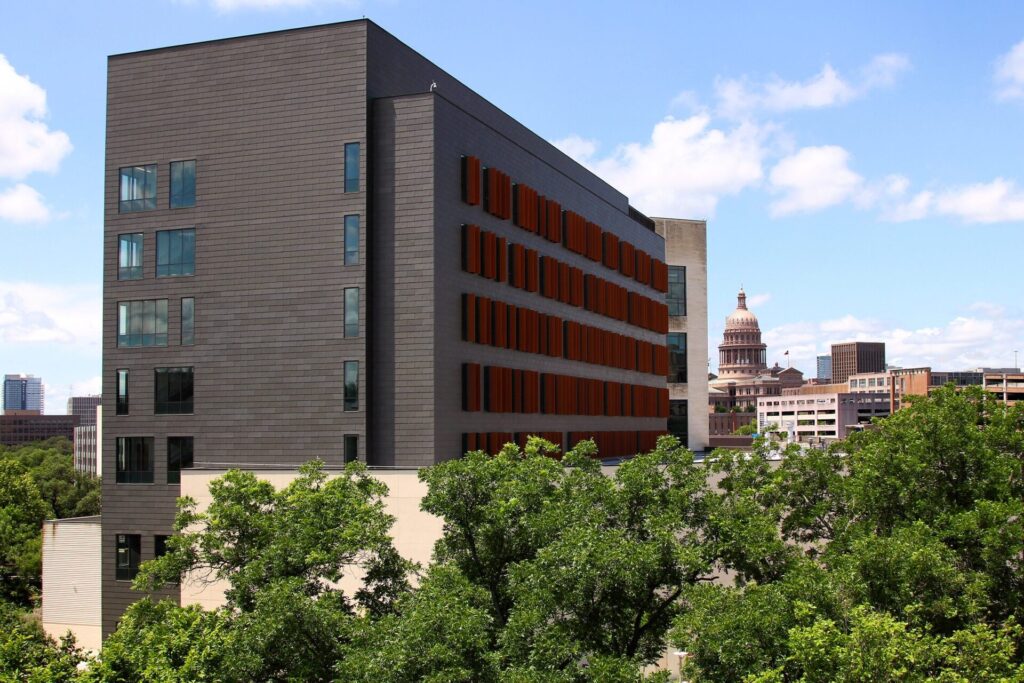
The University of Texas at Austin Dell Medical School, officially known as the Dell Medical School, is a pioneering medical institution founded in 2016 as part of the University of Texas at Austin. Located in Austin, Texas, this public medical school operates from an urban campus and represents one of the newest medical schools in the United States, built from the ground up with innovative educational approaches and modern healthcare delivery models.
Program Duration and Structure
Dell Medical School offers a traditional 4-year MD program following the standard medical education timeline. The school’s innovative “Leading EDGE” curriculum (Excellence in Discovery, Guidance, and Education) distinguishes it from traditional medical education models by emphasizing systems-based thinking, community health, and entrepreneurial approaches to healthcare delivery.
Location and Campus Details
Situated in Austin, Texas, students benefit from studying in one of America’s most vibrant and rapidly growing cities. Austin’s thriving tech ecosystem, cultural diversity, and “Keep Austin Weird” spirit create a unique environment that complements Dell Med’s innovative mission. The school’s modern facilities are integrated into the broader University of Texas at Austin campus, providing access to world-class resources and interdisciplinary collaboration opportunities.
Accreditation Status
Dell Medical School holds full accreditation from the Liaison Committee on Medical Education (LCME), the standard accrediting body for MD programs in the United States. This LCME accreditation ensures that graduates are eligible for USMLE examinations and residency programs nationwide.
Mission and Vision
Dell Medical School’s unique mission focuses on “revolutionizing how people get and stay healthy” by creating physician leaders who are “as comfortable taking on systemic challenges in health as caring for individual patients.” This mission-driven approach permeates every aspect of the curriculum and student experience.
Admission Requirements
Academic Prerequisites
Minimum Degree Requirements
Applicants must possess a bachelor’s degree from a regionally accredited college or university prior to matriculation. There are no restrictions on undergraduate major, and Dell Medical School encourages applications from students with diverse academic backgrounds.
Required Prerequisite Courses
Dell Medical School requires completion of specific prerequisite courses, though the school takes a flexible approach compared to traditional requirements:
Traditional Science Requirements:
- Biology: 8 credit hours (including laboratory)
- General Chemistry: 8 credit hours (including laboratory)
- Organic Chemistry: 8 credit hours (including laboratory)
- Physics: 8 credit hours (including laboratory)
- Mathematics: 6 credit hours (including statistics)
- English: 6 credit hours
Additional Recommendations:
- Biochemistry (strongly recommended)
- Psychology and sociology courses
- Coursework demonstrating critical thinking and communication skills
GPA Requirements
- Median GPA of admitted students: 3.93
- While no minimum GPA is specified, successful applicants typically demonstrate strong academic performance with GPAs well above 3.5
- Both overall GPA and science GPA are considered in holistic evaluation
Standardized Testing Requirements
MCAT Requirements
- Median MCAT score of admitted students: 517
- No minimum MCAT score is specified, but competitive scores typically fall in the 85th percentile or higher
- All four sections of the MCAT are evaluated: Biological and Biochemical Foundations, Chemical and Physical Foundations, Psychological/Social/Biological Foundations, and Critical Analysis and Reasoning Skills
- MCAT scores must be from within the past three years
- The school accepts multiple MCAT attempts and considers the highest score
Extracurricular Activities & Experience Requirements
Dell Medical School employs a holistic evaluation process that heavily weights non-academic experiences:
Clinical Experience: Demonstrated exposure to healthcare through volunteering, shadowing, or employment in clinical settings
Research Experience: Laboratory research, clinical research, or health services research experience preferred
Community Service: Evidence of commitment to serving others, particularly underserved populations
Leadership Experience: Demonstrated leadership roles in various capacities
Mission Alignment: Activities that demonstrate alignment with the school’s mission of systemic health improvement
Application Process & Timeline
Application System
Dell Medical School participates in the Texas Medical & Dental Schools Application Service (TMDSAS) rather than AMCAS. This is unique among Texas medical schools and requires a separate application process for out-of-state applicants.
Key Application Deadlines
- Primary Application Deadline: October 1, 2025
- Secondary applications are sent to qualified candidates following primary application review
- Interview invitations are typically extended from September through February
Required Documents
- Complete TMDSAS application
- Official transcripts from all attended institutions
- MCAT scores
- Letters of evaluation (typically 3-5 letters, including science faculty and clinical experience supervisors)
- Personal statement and essay responses
- Secondary application with school-specific essays
Interview Process
Dell Medical School utilizes a Multiple Mini Interview (MMI) format, which consists of several short stations designed to assess different competencies including ethical reasoning, communication skills, problem-solving, and cultural competency. The MMI format aligns with the school’s innovative approach to medical education and evaluation.
Admission Statistics & Success Rates
Overall Acceptance Rate and Competitiveness
While specific acceptance rates are not publicly disclosed, Dell Medical School is considered highly competitive among Texas medical schools. With a small class size of 50 students per year and the school’s growing reputation, the acceptance rate is estimated to be in the low single digits.
Class Size and Application Volume
- First-year class size: 50 students
- This intimate cohort size allows for personalized attention and close faculty mentorship
- The small class size contributes to the school’s highly selective nature
Academic Statistics of Admitted Students
- Median GPA: 3.93
- Median MCAT: 517 (96th percentile)
- These statistics reflect the highly competitive nature of admissions
Demographics and State Residency
As a Texas public institution, Dell Medical School shows strong preference for Texas residents. However, the school does accept out-of-state and Canadian applicants on a case-by-case basis, making it one of the few Texas public medical schools with this policy.
Tuition & Financial Information
Current Tuition Rates
- In-state tuition: $21,087 per year
- Out-of-state tuition: $35,406 per year
- These rates are competitive compared to other Texas medical schools and significantly lower than private medical schools nationally
Total Cost of Attendance
Beyond tuition, students should budget for:
- Student fees and health insurance
- Living expenses in Austin (estimated $15,000-20,000 annually)
- Books, equipment, and supplies
- Board exam fees and clinical rotation expenses
Financial Aid Options
Dell Medical School offers various financial assistance programs:
- Merit-based scholarships for exceptional applicants
- Need-based financial aid through federal loan programs
- Work-study opportunities within the medical school and UT system
- External scholarship opportunities through various medical and community organizations
The school’s financial aid office provides comprehensive counseling to help students manage educational debt effectively.
Click To See Hundreds Of Consultants Who Can Mentor You:

Curriculum & Program Structure
Leading EDGE Curriculum Overview
Dell Medical School’s innovative Leading EDGE curriculum (Excellence in Discovery, Guidance, and Education) represents a departure from traditional medical education models. This curriculum emphasizes:
Systems-Based Learning: Integration of basic sciences with clinical applications from day one
Community Health Focus: Emphasis on population health and health systems improvement
Entrepreneurial Thinking: Training students to identify and solve healthcare problems innovatively
Technology Integration: Use of cutting-edge educational technologies and simulation
Educational Philosophy and Teaching Methods
The curriculum employs multiple pedagogical approaches:
- Problem-Based Learning (PBL) and Team-Based Learning (TBL)
- Simulation-based training in state-of-the-art facilities
- Early clinical exposure beginning in the first year
- Interdisciplinary collaboration with other UT Austin schools
Pre-Clinical Years (Years 1-2)
The first two years integrate basic science education with clinical skills development:
- Core medical sciences taught in integrated blocks
- Clinical skills training in standardized patient encounters
- Community health projects and population health coursework
- Research opportunities and scholarly projects
Clinical Training (Years 3-4)
Clinical education emphasizes both breadth and depth:
- Core clinical rotations in internal medicine, surgery, pediatrics, psychiatry, obstetrics/gynecology, and family medicine
- Clinical training sites throughout Central Texas, including UT Health Austin
- Elective opportunities for specialty exploration
- Advanced clinical experiences and sub-internships
Residency Preparation and Match Results
Despite being a new institution, Dell Medical School has achieved strong residency match results. Graduates have successfully matched into competitive specialties and programs across the country, reflecting the quality of education and preparation provided.
Combined Degree Programs
Dell Medical School offers several combined degree options for students seeking additional expertise:
MD/MBA Program
- Partnership with the McCombs School of Business at UT Austin
- Focus on healthcare management and business applications
- Additional year of study typically required
MD/MPH Program
- Master of Public Health through the UT School of Public Health
- Emphasis on population health and health policy
- Integrated curriculum allowing completion within the 4-year MD timeline
Pre-Medical Preparation Guidance
Undergraduate Preparation Recommendations
Academic Planning:
- Complete prerequisite courses with strong performance (B+ or better recommended)
- Consider advanced coursework in biochemistry, genetics, and physiology
- Maintain a balanced course load including humanities and social sciences
Research Experience:
- Seek research opportunities in basic sciences, clinical research, or health services research
- Aim for presentations or publications when possible
- Demonstrate sustained commitment rather than brief experiences
Clinical Experience:
- Obtain direct patient care experience through volunteering or employment
- Shadow physicians in various specialties
- Document hours and reflect on experiences meaningfully
Community Service:
- Engage in sustained service activities, particularly those addressing health disparities
- Consider leadership roles in service organizations
- Align activities with Dell Med’s mission of systemic health improvement
MCAT Preparation Strategy
Given the median MCAT score of 517:
- Plan 3-4 months of dedicated study time
- Utilize multiple preparation resources including practice exams
- Consider retaking if initial score is below 510
- Focus on achieving balanced section scores
Financial Planning and Cost Management
Living in Austin
Austin’s cost of living is moderate compared to other major cities:
- Housing costs vary by location and housing type ($800-1,500/month)
- Transportation costs are reasonable with good public transit options
- Food and entertainment costs benefit from Austin’s diverse restaurant scene and cultural offerings
Debt Management Strategies
- Take advantage of in-state tuition if eligible
- Apply for merit-based scholarships early
- Consider federal loan programs with favorable terms
- Plan for loan repayment during residency training
Frequently Asked Questions
Does Dell Medical School consider extracurricular activities important?
Yes, Dell Medical School uses a holistic evaluation process that heavily considers extracurricular activities, particularly those demonstrating leadership, community service, research experience, and alignment with the school’s mission of systemic health improvement.
What is Dell Medical School’s average GPA and MCAT score?
The median GPA for admitted students is 3.93, and the median MCAT score is 517. These represent the 50th percentile of admitted students, indicating that successful applicants typically have strong academic credentials.
How competitive is Dell Medical School compared to other medical schools?
Dell Medical School is highly competitive, with a small class size of 50 students and growing national recognition. The combination of strong median statistics (GPA 3.93, MCAT 517) and innovative curriculum makes it one of the most selective medical schools in Texas.
Does Dell Medical School prefer Texas residents?
As a public Texas institution, Dell Medical School shows strong preference for Texas residents. However, unlike most Texas public medical schools, Dell Med does accept out-of-state and Canadian applicants on a case-by-case basis.
What makes Dell Medical School different from other medical schools?
Dell Medical School’s unique features include its Leading EDGE curriculum emphasizing systems thinking and entrepreneurship, small class size of 50 students, focus on community health and population health, and integration with the broader University of Texas at Austin ecosystem.
When should I apply to Dell Medical School?
Applications should be submitted through TMDSAS by October 1st for the following year’s entering class. Given the competitive nature, early submission is recommended.
Does Dell Medical School accept international students?
Dell Medical School accepts Canadian applicants on a case-by-case basis. International students from other countries should contact the admissions office directly for specific eligibility requirements.
What clinical experience do I need for Dell Medical School?
While no minimum hours are specified, successful applicants typically have substantial clinical experience through volunteering, shadowing, or employment in healthcare settings. Quality and reflection on experiences are more important than quantity.
Does Dell Medical School require research experience?
Research experience is not required but is highly valued. Given the school’s emphasis on innovation and discovery, demonstrated research experience strengthens an application significantly.
What is Dell Medical School’s curriculum like?
The Leading EDGE curriculum integrates basic sciences with clinical applications from the beginning, emphasizes systems-based thinking and population health, includes early clinical exposure, and prepares students to be innovative healthcare leaders.
Where do Dell Medical School graduates match for residency?
Despite being a new institution, Dell Medical School graduates have successfully matched into competitive residency programs across various specialties nationwide, reflecting the quality of education provided.
How much does Dell Medical School cost?
Tuition is $21,087 annually for Texas residents and $35,406 for out-of-state students. Total cost of attendance including living expenses is estimated at approximately $40,000-45,000 for in-state students.
What financial aid is available at Dell Medical School?
Dell Medical School offers merit-based scholarships, need-based financial aid through federal programs, work-study opportunities, and guidance on external scholarship applications.
Does Dell Medical School offer interviews to all qualified applicants?
No, interview invitations are selective and based on comprehensive review of applications. Dell Medical School uses an MMI (Multiple Mini Interview) format for candidate evaluation.
The University of Texas at Austin Dell Medical School represents an innovative approach to medical education, combining the resources of a top-tier research university with a mission-driven focus on transforming healthcare delivery. With its competitive admissions standards, unique curriculum, and commitment to training physician leaders, Dell Medical School offers an exceptional educational experience for the next generation of healthcare professionals.