Last updated on January 9th, 2026 at 06:30 am
Program Overview & Institution Identity
Official Program Name and Duration
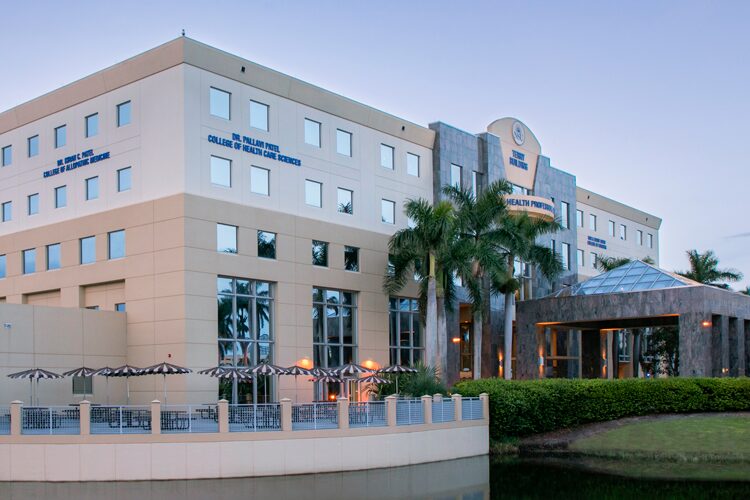
Nova Southeastern University Dr. Kiran C. Patel College of Allopathic Medicine (NSU MD) is a 4-year MD program that provides innovative, patient-centered medical education. Founded in 2016 and receiving its first students in 2017, NSU MD represents a new generation of medical schools designed to meet the evolving needs of healthcare.
The program follows a traditional 4-year structure with unique features that set it apart from other medical schools in Florida:
- Small class sizes with only 62 students per year, allowing for individualized attention
- Early clinical immersion starting in the first year
- Problem-based learning (PBL) in small groups of 7-8 students
- Integrated curriculum combining basic science and clinical courses from day one
Location and Campus Details
Located in Davie, Florida, NSU MD operates from a modern urban campus in the heart of South Florida. The school benefits from its proximity to the greater Fort Lauderdale and Miami metropolitan areas, providing access to:
- Diverse patient populations for clinical training
- Multiple hospital systems and clinical sites
- Research opportunities in a growing biomedical corridor
- Year-round clinical rotations in a variety of healthcare settings
Accreditation Status
NSU MD received Full Accreditation from the Liaison Committee on Medical Education (LCME) on February 16, 2023. This accreditation is crucial for students as it:
- Ensures graduates can obtain medical licensure in all 50 states
- Allows students to participate in the National Resident Matching Program (NRMP)
- Qualifies students for federal financial aid programs
- Demonstrates the program meets the highest standards for medical education
Ranking and Recognition
While NSU MD is relatively new and therefore unranked in traditional US News rankings, the school has achieved several notable recognitions:
- 100% residency match rate for 2022, 2023, and 2024 graduating classes
- Students have matched into 21 different specialties across 26 states
- 56% of graduates remain in Florida for residency training
- Above-average research productivity among students
Admission Requirements
Academic Prerequisites
Minimum Degree Requirements:
Students must have earned a bachelor’s degree from an accredited college or university in the United States by July 15 of the year they begin medical school. The degree may be in any discipline, as long as prerequisite coursework is completed.
Required Prerequisite Courses:
- Biology: 2 semesters (or equivalent) with lab
- Biochemistry: 1 semester with or without lab
- General Chemistry: 2 semesters (or equivalent) with lab
- Organic Chemistry: 2 semesters (or equivalent) with lab
- Physics: 2 semesters (or equivalent)
- Mathematics (college level): 1 semester (or equivalent). Calculus is not required; statistics is acceptable.
Additional Recommended Courses:
- Immunology
- Anatomy
- Physiology
- Genetics
Advanced Placement Policy:
AP courses will fulfill prerequisite requirements if individual courses and credits awarded are detailed on the applicant’s college/university transcript.
GPA Requirements
- Minimum GPA: While not explicitly stated, successful applicants typically have strong academic records
- Median GPA of admitted students: 3.87 (based on recent data)
- Competitive Range: Most admitted students have GPAs above 3.75
Standardized Testing
MCAT Requirements:
- Median MCAT score: 513 (recent data)
- Competitive scores: Students should aim for scores above 510 to be competitive
- Score validity: Current MCAT scores must be valid according to AAMC guidelines
- Retake policy: NSU MD considers the highest score if multiple attempts are made
Additional Testing:
NSU MD does not specifically require CASPer testing, though students should verify current requirements as policies may change.
Personal Attributes and Experience Requirements
NSU MD evaluates candidates holistically, considering:
Essential Personal Attributes:
- Intrinsic motivation to pursue the M.D. degree
- Social skills and cultural competence
- Teamwork and leadership abilities
- Verbal and written communication skills
- Ethical responsibility to self and others
- Reliability, dependability, resilience, and adaptability
- Altruism and critical thinking skills
Valued Experiences:
- Clinical exposure: Direct patient care experience preferred
- Research experience: Opportunities to engage in scientific inquiry
- Community service: Commitment to serving others
- Leadership roles: Demonstrated ability to guide and motivate others
- Diverse experiences: Unique perspectives that contribute to class diversity
Application Process & Timeline
Application System
NSU MD participates in the American Medical College Application Service (AMCAS). The application process follows these steps:
Five-Step Application Process:
- Complete Primary Application: Submit through AMCAS
- AMCAS Verification: AMCAS verifies and processes your application
- Secondary Application: After AMCAS verification, you’ll receive an email invitation to complete NSU MD’s secondary application
- Submit Secondary Application: Complete and submit by the deadline
- Letters of Recommendation: Submit through AMCAS Letters Service
Application Deadlines
- Primary Application Deadline: December 31, 2025
- Secondary Application: Must be completed promptly after receiving invitation
- Secondary Application Fee: $50 (non-refundable)
Required Documents
- Transcripts: All college/university transcripts through AMCAS
- Letters of Recommendation: Submitted through AMCAS Letters Service
- Personal Statement: As part of AMCAS application
- Secondary Essays: School-specific essays (see below)
Secondary Application Essays
2025-2026 Secondary Essay Prompts (All 4000 characters maximum):
- Teamwork and Leadership: Please provide an example that indicates your ability to function effectively as a productive member of a team working toward a common objective. Elaborate on leadership roles you held in this capacity and how you solved problems that arose.
- Problem-Based Learning: Please share some personal examples of problem-solving in a team environment and/or leadership experience that would lead to your success in a Problem Based Learning environment.
- Unique Perspective: At the NSU MD program, we value the unique perspective that each applicant brings. Identify any traits, life experiences, or interests that a professor or advisor would not normally know about you.
- Academic Preparation: How has your academic work beyond the “traditional” pre-medical school requirements prepared you for medical school and for a career in medicine? Please highlight any service-learning activities that align with humanism in medicine.
- Personal Challenges: Have you encountered significant personal or professional challenges that have shaped your motivation to pursue a career in medicine and service to others?
- Challenge Response: If applicable, please describe how your experience with challenges has informed your perspective, decision-making, or approach to helping others.
- Academic Gaps: Do you have any gaps or inconsistencies in either academic or standardized test performances throughout your undergraduate, graduate, or post-graduate career?
- Time Gap: Is there a time gap between earning your last degree and expected medical school matriculation?
- Previous Applications: Have you previously applied to any medical school (M.D., D.O., international)?
Interview Process
NSU MD uses a Virtual Multiple Mini Interview (MMI) format that assesses core competencies essential for success in medical school.
Interview Details:
- Format: Virtual MMI with traditional interview elements
- Focus: Personal and professional characteristics beyond academic scores
- Assessment Areas: Teamwork, problem-solving, communication, ethics, and cultural competency
- Campus Visits: Optional campus visit opportunities are offered throughout the interview cycle
Interview Preparation Tips:
- Prepare as you would for an in-person interview
- Practice articulating your experiences and motivations clearly
- Review your application materials thoroughly
- Be ready to discuss teamwork and leadership examples
Admission Statistics & Success Rates
Overall Acceptance Rate
Based on available data, NSU MD has an acceptance rate of approximately 1.14%, making it highly competitive among medical schools. This rate reflects:
- 5,457 applicants for recent cycles
- 62 students matriculated per class
- High selectivity due to small class size
Application Volume and Class Size
- Annual Applications: Approximately 5,400+ applications
- First-Year Class Size: 62 students
- Interview Rate: Highly selective with limited interview spots
Academic Statistics of Admitted Students
- Median GPA: 3.87
- Median MCAT: 513
- GPA Range: Most successful applicants have GPAs above 3.75
- MCAT Range: Competitive scores typically above 510
Demographics and Geographic Distribution
- Florida Residents: Strong preference for Florida residents, though out-of-state applicants are considered
- International Students: Not currently accepted
- Visiting Students: Not currently accepted
- Age Diversity: Mix of traditional and non-traditional students
Post-Graduation Success
- Residency Match Rate: 100% for 2022, 2023, and 2024 classes
- Specialties Matched: 21 different specialties
- Geographic Placement: 26 states with 56% remaining in Florida
- Research Productivity: Above national average for matched students
Tuition & Financial Information
Current Tuition Rates
NSU MD has uniform tuition for all students regardless of residency status:
- Annual Tuition: $71,617 (2025-26 academic year)
- In-State Tuition: $71,617
- Out-of-State Tuition: $71,617
- International Students: Not currently accepted
Additional Fees by Year
First Year Students:
- Books & Supplies: $7,200
- Institutional Fees: $3,295
- Health Insurance: $2,848
Second & Third Year Students:
- Books & Supplies: $7,200
- Institutional Fees: $1,945
- Health Insurance: $2,848
Fourth Year Students:
- Books & Supplies: $9,275
- Institutional Fees: $1,345
- Health Insurance: $2,848
Total Cost of Attendance
Annual Cost Breakdown (First Year):
- Tuition: $71,617
- Books & Supplies: $7,200
- Institutional Fees: $3,295
- Health Insurance: $2,848
- Housing & Food: $36,829
- Transportation: $6,973
- Personal Expenses: $4,045
- Loan Fees: $500
- Total Annual COA: $133,307
Four-Year Total Investment:
Approximately $520,000-$530,000 for the complete MD program, depending on year-to-year variations in living expenses and fees.
Living Expenses
- Housing & Food: $36,829 annually (first three years), $27,662 (fourth year)
- Transportation: $6,973 annually (first three years), $5,230 (fourth year)
- Personal Expenses: $4,045 annually (first three years), $3,034 (fourth year)
Financial Aid Options
Scholarship Opportunities:
- Dean’s Scholarship Fund: Partial tuition for students interested in cancer immunotherapy research
- Dr. Kiran C. Patel College of Allopathic Medicine Fund: All accepted students automatically considered
- Health Professions Division Chancellor’s Scholarships: Full and/or partial tuition for in-state students
- Mary Jane Harlow Scholarship Fund: Partial tuition, FAFSA required
- Steven and Rosemary Kircher Scholarship: Separate application required
Federal Financial Aid:
- 85% of eligible students receive financial aid
- Federal loans available through FAFSA
- Work-study opportunities
- More than $100 million in scholarships offered university-wide
Financial Aid Statistics:
- 85% of U.S. citizens or permanent residents receive financial aid
- 92% of undergraduate students receive scholarships and/or grants
- Payment plans available to help manage costs
Click To See Hundreds Of Consultants Who Can Mentor You:

Curriculum & Program Structure
Program Duration and Philosophy
NSU MD offers a 4-year MD program with an innovative, patient-centered approach that differs significantly from traditional medical education models:
Educational Philosophy:
- Patient-centered learning with patients at the center of every case
- Problem-based learning (PBL) in small groups
- Team-based approach to medical problem-solving
- Early clinical exposure beginning in the first year
- Integration of basic science and clinical courses throughout
Teaching Methods and Learning Environment
Small Group Learning:
- 7-8 students per group for problem-based learning sessions
- Faculty facilitators guide inquiry-based learning
- Real-world clinical cases drive curriculum
- Simulated patients and authentic examples
Active Learning Approaches:
- Case-based learning methodology
- Team collaboration on complex medical problems
- Critical thinking skill development
- Hands-on clinical skills from day one
Pre-Clinical Years (Years 1-2)
- Integrated curriculum combining basic science and clinical components
- Early clinical immersion starting in year one
- Problem-based learning sessions multiple times weekly
- Clinical skills training from the beginning
- Research opportunities available throughout
Assessment Methods:
The program uses comprehensive assessment strategies, though specific grading policies (pass/fail vs. graded) should be confirmed with the admissions office.
Clinical Training (Years 3-4)
Clinical Sites and Partnerships:
NSU MD provides extensive clinical training opportunities through partnerships with:
- HCA East Florida: Primary hospital partner employing 6,000+ physicians
- 14 hospitals in the network
- Surgery centers and imaging facilities
- Free-standing emergency care facilities
- Regional laboratory services
- On-site teaching hospital for enhanced learning experiences
Core Rotations:
Students complete required rotations in major medical specialties at multiple clinical locations, ensuring broad exposure to patient diversity and clinical scenarios.
Elective Opportunities:
- Research electives throughout the program
- Community-based rotations
- Specialty exploration options
- Advanced clinical experiences
Special Programs and Combined Degrees
Available Combined Degrees:
- MD/MBA: Business administration combined with medical degree
- BS/MD: Accelerated pathway from undergraduate to medical school
Research Integration:
- Clinical research opportunities
- Medical education research
- Translational research projects
- Epidemiology studies
- Student research productivity above national averages
- Conference presentations and publications encouraged
Seven Core Competencies
NSU MD students develop proficiency in:
- Medical Knowledge: Biomedical, clinical, epidemiological, and social-behavioral sciences
- Patient Care: Compassionate, appropriate, and effective care
- Practice-Based Learning: Self-assessment and lifelong learning
- Interpersonal and Communication Skills: Effective information exchange
- Professionalism: Ethical behavior and cultural sensitivity
- Systems-Based Practice: Healthcare systems awareness
- Critical Thinking: Problem-solving and diagnostic skills
Pre-Medical Preparation
Undergraduate Program Recommendations
Optimal Academic Background:
While NSU MD accepts students from any undergraduate major, successful applicants typically demonstrate:
- Strong foundation in required science courses
- Diverse academic interests beyond pre-medical requirements
- Research experience in clinical, basic science, or public health
- Leadership roles in extracurricular activities
Recommended Course Sequencing:
- Complete prerequisite courses with strong performance
- Balance science coursework with diverse electives
- Consider advanced biology courses (immunology, anatomy, physiology, genetics)
- Develop strong writing and communication skills
Clinical Experience Requirements
Types of Clinical Exposure Valued:
- Direct patient care experience (hospital volunteering, EMT, medical assistant)
- Shadowing physicians in various specialties
- Community health initiatives
- Medical mission trips or service learning
Quality vs. Quantity:
NSU MD values meaningful, sustained clinical exposure that demonstrates:
- Understanding of healthcare delivery
- Commitment to patient care
- Exposure to healthcare team dynamics
- Cultural competency development
Research Experience Expectations
Research Opportunities:
While not explicitly required, research experience strengthens applications:
- Basic science research: Laboratory investigations
- Clinical research: Patient-oriented studies
- Public health research: Population-based studies
- Medical education research: Teaching and learning studies
Research Productivity:
NSU MD students demonstrate above-average research productivity, suggesting the program values applicants with research backgrounds and continues to support research throughout medical school.
Extracurricular Planning
Leadership Development:
- Student government participation
- Organization leadership roles
- Community service coordination
- Mentoring and tutoring activities
Service Commitment:
- Long-term community engagement
- Healthcare-related volunteering