Last updated on January 9th, 2026 at 06:30 am
Program Overview & Institution Identity
Official Program Name and Location
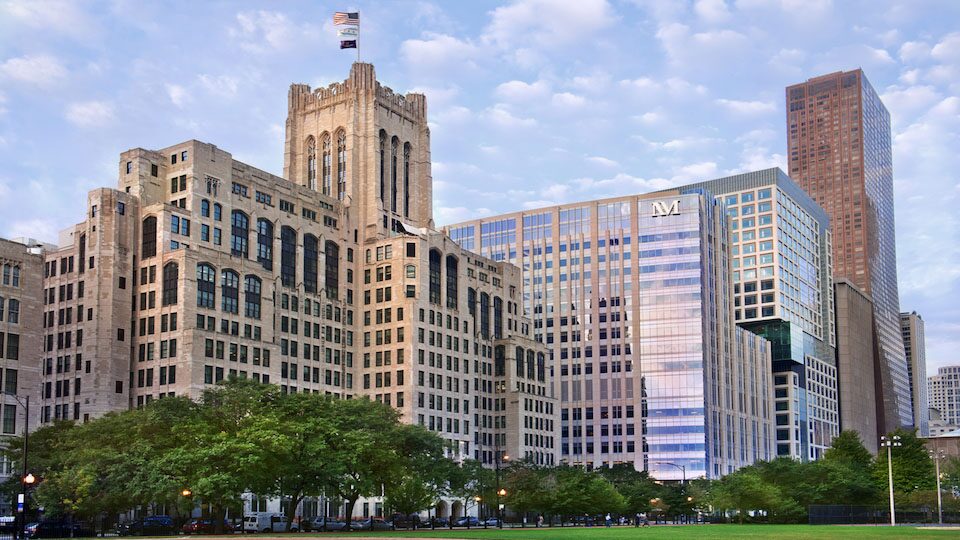
Northwestern University Feinberg School of Medicine is a prestigious private medical institution located in Chicago, Illinois, specifically in the Streeterville neighborhood. The school operates on an urban campus and is one of 12 Northwestern University schools and colleges nationwide. As a private institution, Feinberg serves students from all geographic backgrounds, accepting out-of-state, Canadian, and international students.
Program Duration and Structure
Feinberg offers a comprehensive 4-year Doctor of Medicine (MD) program designed to prepare future leaders in medicine. The curriculum follows an integrated three-phase structure that emphasizes four curricular elements and weaves in seven threads to help students develop into evidence-based clinicians who provide cost-effective, safe, quality care as part of an interprofessional team.
Accreditation Status
Northwestern University Feinberg School of Medicine is fully accredited by the Liaison Committee on Medical Education (LCME), ensuring that the program meets the highest standards for medical education in the United States. This accreditation is essential for graduates to be eligible for medical licensing and residency training programs.
Rankings and Recognition
Feinberg School of Medicine has been named one of the best medical schools for surgery in both the US and the world. The school is consistently ranked among top medical institutions and is particularly recognized for its robust research landscape, cutting-edge facilities, and field-leading research mentors. Northwestern generates 70 percent of all research dollars at Northwestern University, with Feinberg receiving $706 million in research funding and awards in 2023.
Distinctive Features
What sets Feinberg apart is its holistic approach to medical education, combining:
- Education-Centered Medical Home: Early, authentic exposure to team-based medicine
- Area of Scholarly Concentration: Mentored, hypothesis-driven investigation with 100% of students engaged in research at undergraduate or graduate level
- Problem-Based Learning: Inquiry, critical thinking, and knowledge application through clinical cases
- Inclusive Environment: Creating and sustaining a diverse and inclusive educational experience
Admission Requirements
Academic Prerequisites
Minimum Degree Requirements
Northwestern University Feinberg School of Medicine requires the equivalent of 90 semester hours or 135 quarter hours of undergraduate and/or graduate-level coursework completed at an accredited U.S. or Canadian college or university. A bachelor’s degree is required prior to matriculation (this requirement is waived only for Northwestern undergraduates enrolled in dual-degree programs where the degree is granted upon completion of the first year of medical school).
Required Courses
All applicants must complete the following prerequisite courses (two semesters/three quarters, including lecture and associated lab):
- Biology (yearlong course with lab)
- Physics (yearlong course with lab)
- General (Inorganic) Chemistry (yearlong course with lab)
- Organic Chemistry/Biochemistry (yearlong course with lab) – Note: It is acceptable to have one semester/two quarters of organic chemistry plus one semester/one quarter of biochemistry, with associated labs
Highly Recommended Courses
- English Composition
- Statistics
- Biochemistry
Encouraged Courses
Additional coursework in genetics, public health, humanities, and social sciences (such as psychology, sociology, ethics) is encouraged.
AP Coursework Policy
Science AP courses for which an applicant has received course credit at their undergraduate degree-granting institution will be considered as fulfilling pre-medical science course requirements. However, applicants should expect to complete advanced level undergraduate courses in the science disciplines for which AP credit was awarded.
GPA Requirements
While Feinberg does not specify a strict minimum GPA requirement, the academic standards are exceptionally high. Based on the Class of 2025 profile:
- Median GPA: 3.94 (previously 3.93 for earlier classes)
- Successful applicants typically demonstrate consistently strong academic performance across all coursework, including post-baccalaureate and graduate studies
The admissions committee evaluates all coursework completed prior to application, placing emphasis on both breadth and rigor of the academic program.
Standardized Testing Requirements
MCAT Requirements
The Medical College Admission Test (MCAT) is required for all applicants. Key details include:
- Median MCAT Score: 521 (Class of 2025)
- Validity Period: MCAT scores must be from within the last three years
- Competitive Range: While no minimum is specified, scores above 520 are highly competitive
- No retake limit is specified, but applicants should carefully consider retaking only if expecting significant improvement
Additional Testing
Northwestern University Feinberg School of Medicine does not require the CASPer test or other additional standardized assessments beyond the MCAT.
Extracurricular Activities & Experience Requirements
Feinberg employs a holistic evaluation process that considers multiple factors beyond academic metrics:
Research Experience
- 100% of enrolled students have engaged in research at undergraduate or graduate level
- The school values both basic science and clinical research experiences
- Scholarly work and publications are viewed favorably but not required
Clinical Exposure
Students are expected to have meaningful clinical exposure prior to application. The school values experiences that demonstrate understanding of medicine as a service profession.
Leadership and Service
The Committee on Admissions seeks candidates who have demonstrated:
- Leadership skills
- Intellectual curiosity
- Personal maturity
- Commitment to service
Additional Considerations
- Geographic Diversity: The Class of 2025 represents students from 32 states and the District of Columbia
- Academic Diversity: No preference is given to science majors over humanities majors – the school actively recruits students with diverse academic backgrounds
- Life Experiences: Premium is placed on breadth of life experiences and liberal education
Application Process & Timeline
Application System
Northwestern University Feinberg School of Medicine participates in the American Medical College Application Service (AMCAS) for primary applications.
Key Deadlines for 2025-2026 Cycle
Regular Decision Timeline
- May 28, 2025: Earliest date for AMCAS application submission
- June 27, 2025: Earliest date to be invited to complete secondary application
- November 1, 2025: AMCAS application deadline
- November 15, 2025: Secondary application deadline
- November 15, 2025: Letters of recommendation deadline
- August – February: Interview season
- April 9 & 10, 2026: Feinberg First Look (Second Look)
- July 6, 2026: Final enrollment commitment deadline
Early Decision Program (EDP) Timeline
Feinberg offers a small, selective Early Decision MD program with earlier deadlines:
- June 1, 2025: Must notify Admissions Office of EDP interest
- August 1, 2025: AMCAS deadline for EDP
- August 15, 2025: Secondary application and letters of recommendation deadline
- August 2025: EDP interviews
- By September 15, 2025: EDP decision notification
Required Documents
- AMCAS Application: Primary application including transcripts, MCAT scores, activities, and personal statement
- Secondary Application: School-specific essays and questions (fee: $95, with FAP waiver available)
- Letters of Recommendation: Required number and specific requirements detailed in secondary application
- Transcripts: All undergraduate and graduate coursework
Interview Process
- Format: Traditional interview format (not MMI)
- Timeline: Interviews conducted from August through mid-February
- Selection: Interview invitations issued solely at the request of the Committee on Admissions
- Modified Rolling Admissions: Uses batched approach for sending acceptances; first acceptances typically sent in December, with most decisions pending until March
Admission Statistics & Success Rates
Overall Competitiveness
Northwestern University Feinberg School of Medicine is among the most competitive medical schools in the United States:
Application Volume and Acceptance Rate
- Applications Received (Class of 2025): 8,610
- Applicants Invited to Interview: 704
- Class Size: 140 students
- Acceptance Rate: Approximately 1.7% (extremely competitive)
Academic Profile of Admitted Students
Based on the Class of 2025 entering class profile:
Academic Statistics
- Median GPA: 3.93
- Median MCAT: 521
- Geographic Representation: Students from 32 states plus District of Columbia
- Undergraduate Institutions Represented: 50 different schools
Demographics and Background
- Gender Distribution: 54% women, 45% men, 1% another gender identity
- Underrepresented in Medicine: 15%
- LGBTQ+ Students: 19%
- Student Athletes: 12%
- Study Abroad Experience: 33%
- Teaching/Tutoring Experience: 92%
- Languages: Students are proficient in 25 languages, most commonly Spanish, Chinese, French, German, Hindi, and Latin
Gap Year Information
Two-thirds of the entering class took one or more gap years:
- No gap year: 37%
- One gap year: 34%
- Two or more gap years: 29%
Academic Majors Represented
Students come from 45 different fields of study, including:
- Biology and biochemistry
- Biomedical engineering
- Chemistry
- Global health
- Molecular biology
- Neuroscience
- Psychology
- And many non-science fields
Research and Experience Profile
- 100% engaged in research at undergraduate or graduate level
- 93% received institutional funding
- Strong emphasis on diverse experiences and leadership
Tuition & Financial Information
Current Tuition Rates (2024-2025 Academic Year)
Northwestern University Feinberg School of Medicine charges the same tuition for all students regardless of residency status:
- Annual Tuition: $73,601 (both in-state and out-of-state)
- Note: As a private institution, Northwestern does not differentiate between in-state and out-of-state tuition
Detailed Cost Breakdown
M1 Year (10 months, August – May)
Direct Costs:
- Tuition: $71,946
- Fees (UPass, Student Activity, Disability Insurance): $1,423
- Health Services Fee: $828
- Health Insurance*: $6,150
- Total Direct Costs: $80,347
Indirect/Variable Costs:
- Housing and Food: $23,500
- Personal Expenses: $3,000
- Books: $2,000
- Transportation: $1,720
- Loan Fees: $1,624
- Total Indirect Costs: $31,844
Total M1 Cost of Attendance: $112,191
*Health Insurance charge waived if student opts out of Northwestern Health Insurance Plan
Four-Year Program Cost Analysis
Based on current tuition rates, the total estimated cost for the 4-year MD program:
- Total Tuition (4 years): Approximately $294,404
- Total Cost of Attendance (4 years): Approximately $400,000-$450,000 (including living expenses)
Financial Aid and Scholarships
Financial Aid Philosophy
Feinberg is committed to providing comprehensive financial aid packages and will offer eligible students federal loan assistance, less any other aid received, to cover up to 100% of financial need as determined by their financial aid analysis.
Types of Financial Aid Available
- Federal Student Loans: Direct Unsubsidized and Grad PLUS loans
- Need-Based Grants: Institutional grant funding based on financial need
- Merit-Based Scholarships: Automatic consideration for all accepted students (no separate application required)
- Institutional Funding: 93% of entering students received some form of institutional funding
Student Debt Information
- Mean Education Debt (Class of 2024): $200,335
- Mean Education Debt (Class of 2023): $203,195
- National Average (Private Schools, Class of 2023): $222,381
- Feinberg graduates graduate with less debt on average than the national mean for private medical schools
Special Considerations for International Students
International students may apply for private loans through participating lenders but must have a U.S. citizen or permanent resident co-signer who is creditworthy and agrees to repay the loan if the student fails to do so.
Cost of Living in Chicago
Chicago offers a diverse range of living options for medical students:
- Estimated Annual Housing/Food: $23,500 (as included in cost of attendance)
- Transportation: $1,720 annually (includes public transit options)
- Personal Expenses: $3,000 annually
The Streeterville location provides access to clinical affiliates and is well-connected to public transportation, helping to manage living costs.
Click To See Hundreds Of Consultants Who Can Mentor You:

Curriculum & Program Structure
Program Duration and Philosophy
Northwestern University Feinberg School of Medicine offers a comprehensive 4-year MD program structured around an integrated three-phase curriculum. The program emphasizes preparation for real-world medical practice, both current and future, with a commitment to an inclusive curriculum that is free of bias and promotes health equity for all.
Educational Philosophy and Approach
The curriculum is built on nine organizing principles that value:
- Inclusivity and community
- Competency-based education
- Evidence-based practice
- Interprofessional collaboration
- Cost-effective, safe, quality care
Three-Phase Curriculum Structure
Phase 1: Pre-Clinical Foundation
The pre-clinical years focus on building fundamental knowledge through:
- Problem-Based Learning (PBL): Inquiry, critical thinking, and knowledge application through clinical cases
- Integrated Basic Sciences: Biology, chemistry, physics, and other foundational sciences applied to medical contexts
- Early Clinical Exposure: Through the Education-Centered Medical Home program
Phase 2: Clinical Application
- Core Clinical Rotations: Required rotations in major medical specialties
- Clinical Skills Development: Hands-on training in hospital and outpatient settings
- Assessment Methods: Competency-based evaluation system
Phase 3: Advanced Clinical Training and Specialization
- Advanced Clinical Rotations: Specialized rotations and electives
- Residency Preparation: Support for residency applications and career planning
- Scholarly Projects: Completion of Area of Scholarly Concentration
Unique Curricular Features
Education-Centered Medical Home (ECMH)
Provides early, authentic exposure to team-based medicine, allowing students to:
- Experience interprofessional collaboration from the beginning
- Work with real patients in clinical settings
- Develop understanding of healthcare delivery systems
Area of Scholarly Concentration (AOSC)
All students participate in mentored, hypothesis-driven investigation:
- 100% participation: Every student engages in scholarly research
- Mentored Research: Work with faculty mentors on original research projects
- Diverse Research Areas: Basic science, clinical research, public health, and translational research opportunities
Problem-Based Learning Integration
- Small group learning sessions focused on clinical cases
- Development of critical thinking and analytical skills
- Application of basic science knowledge to clinical scenarios
- Collaborative learning environment
Clinical Training and Affiliations
Feinberg maintains partnerships with premier healthcare institutions providing diverse clinical training opportunities:
Primary Clinical Affiliates
- Northwestern Memorial Hospital
- Ann & Robert H. Lurie Children’s Hospital of Chicago
- Jesse Brown VA Medical Center
- Shirley Ryan AbilityLab
Clinical Rotation Structure
- Geographic Distribution: Clinical sites throughout Chicago area
- Specialty Coverage: Comprehensive exposure to all major medical specialties
- Community-Based Rotations: Experience in diverse healthcare settings
- International Opportunities: Optional international rotation experiences
Special Programs and Combined Degrees
Feinberg offers several combined degree options for students seeking additional specialization:
Available Combined Degrees
- MD/PhD: For students pursuing physician-scientist careers
- MD/MPH: Master of Public Health combined with medical degree
- MD/MBA: Business administration combined with medical degree
Specialized Tracks
- Research-intensive pathways
- Primary care focused tracks
- Global health opportunities
- Leadership development programs
Residency Preparation and Career Outcomes
Residency Match Success
Northwestern University Feinberg School of Medicine demonstrates exceptional outcomes in residency placement:
Overall Match Statistics
- 68% of students match at top-25 U.S. News-ranked residency programs
- Exceptionally strong match rates across all specialties
- National recognition: Graduates successfully compete for prestigious residency positions nationwide
Recent Match Results by Geographic Distribution
Feinberg graduates have matched at residency programs across the United States:
- Illinois: 60 matches (strong local connections)
- California: 29 matches
- New York: 17 matches
- Massachusetts: 16 matches
- Pennsylvania: 12 matches
- Additional matches in Arizona, Colorado, Florida, Georgia, and other states
Specialty Diversity
Students have successfully matched in competitive specialties including:
- Internal Medicine
- Surgery
- Emergency Medicine