Last updated on January 9th, 2026 at 06:33 am
Program Overview & Institution Identity
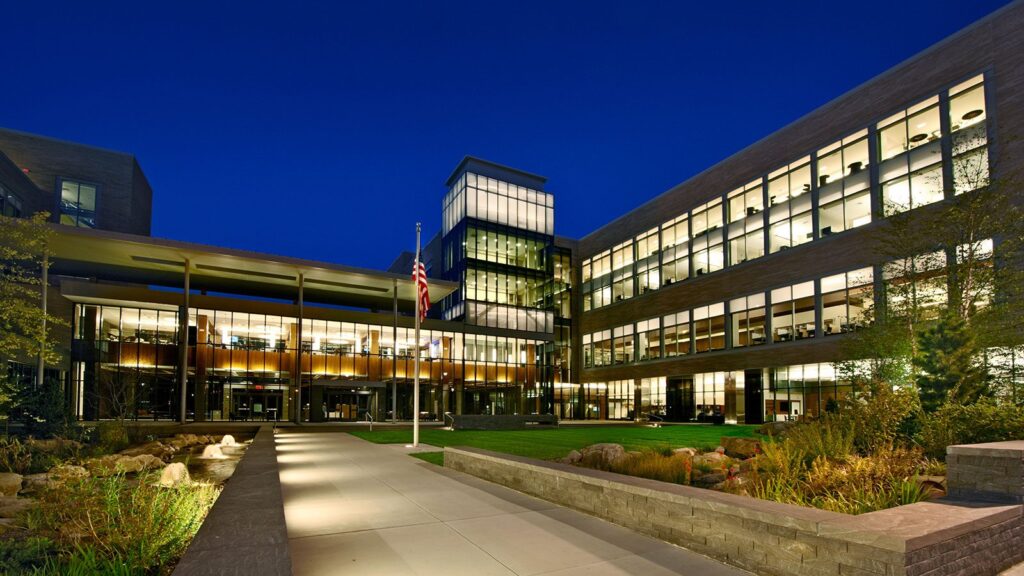
Geisinger Commonwealth School of Medicine (GCSOM) is a private, not-for-profit medical school located in Scranton, Pennsylvania. Founded in 2008, the school is part of Geisinger College of Health Sciences and maintains full accreditation from the Liaison Committee on Medical Education (LCME), ensuring its graduates are eligible for residency training in the United States.
Program Duration & Structure
GCSOM offers a 4-year Doctor of Medicine (MD) program structured around their innovative “Total Health Curriculum.” The program follows a three-phase approach:
- Phase 1: Principles of Medical Science and Practice (foundational sciences)
- Phase 2: Core Clinical Immersion (clinical rotations)
- Phase 3: Career Differentiation and Exploration (advanced clinical training)
Location & Campus
The medical school is situated on an urban campus in Scranton, Pennsylvania, serving the northeastern and central Pennsylvania regions. The school emphasizes community-based, patient-centered education with clinical training sites throughout the Geisinger Health System.
Accreditation & Recognition
- LCME Accredited (Liaison Committee on Medical Education)
- MSCHE Accredited (Middle States Commission on Higher Education)
- Ranked #96 in Best Medical Schools nationally
- Known for exceptional USMLE Step 1 pass rates exceeding 98% (significantly above the national average of 91%)
Admission Requirements
Academic Prerequisites
Minimum Degree Requirements: Applicants must hold a bachelor’s degree from an accredited U.S. or Canadian institution prior to matriculation.
Recommended Coursework: While GCSOM doesn’t require specific prerequisite courses, they strongly recommend:
- Biochemistry with laboratory
- Biology with laboratory (2 courses)
- Chemistry with laboratory (2 courses)
- Organic chemistry with laboratory (2 courses)
- Physics with laboratory (2 courses)
- Statistics
Note: Online coursework is generally not accepted, except for courses taken online due to COVID-19.
GPA Requirements
Median GPA: 3.89 for enrolled students
- Average undergraduate GPA: 3.81
- Average science GPA: 3.77
- Average non-science GPA: 3.87
While no minimum GPA is specified, competitive applicants typically demonstrate strong academic performance across all coursework.
Standardized Testing
MCAT Requirements:
- Median MCAT Score: 514 (87th percentile)
- Average MCAT Score: 513.06
- MCAT tests taken between June 2022 and September 2025 are accepted for the 2025-2026 application cycle
- All applicants must submit valid MCAT scores
Additional Testing:
- AAMC PREview (Professional Readiness Exam): Strongly encouraged
- CASPer: Not required
Citizenship Requirements
- Must be a U.S. citizen or permanent resident at time of application
- International students: Accepted on a case-by-case basis (limited)
- Canadian students: Considered out-of-state, case-by-case basis
Application Process & Timeline
Application System
GCSOM participates in the American Medical College Application Service (AMCAS), the centralized application system for U.S. MD programs.
Application Deadlines:
- AMCAS Application Deadline: December 15, 2025
- Secondary Application Deadline: January 15, 2026
- Early Decision Program (EDP): August 1 deadline
Required Documents
Letters of Recommendation:
- Option 1: One pre-professional/pre-health committee letter
- Option 2: Three individual evaluation letters from faculty familiar with academic coursework and career goals
- Maximum of four letters accepted
- Non-traditional students may submit letters from individuals with firsthand knowledge of their abilities and commitment to medicine
Secondary Application:
- Application Fee: $100
- FAP Waiver: Available for AMCAS Fee Assistance Program recipients
- All verified AMCAS applicants automatically receive secondary application
Interview Process
Interview Format: Multiple Mini Interview (MMI) conducted virtually
- Invitations sent after comprehensive application review
- Committee evaluates academic potential and alignment with school’s mission
- No specific statistics on interview invitation rates available publicly
Selection Criteria: Holistic evaluation considering:
- Academic achievement
- Interview performance
- Alignment with GCSOM’s mission and values
- Extracurricular experiences and personal qualities
Admission Statistics & Success Rates
Competitiveness
First-Year Class Size: 115 students (Class of 2029: 126 students)
Overall Acceptance Rate: Approximately 2.03% (highly competitive)
Application Volume: Over 5,600+ applications annually
Demographics of Enrolled Students (Class of 2029)
Geographic Distribution:
- 91 Pennsylvania residents
- 32 from Geisinger’s target counties
- 35 from out-of-state
Diversity Statistics:
- Gender: 64 women, 59 men, 3 other gender identity
- Age Range: 21-42 years (average age: 24)
- 40 students from diverse backgrounds
- 14 first-generation college graduates
- 5 from communities underrepresented in medicine
- 45 Abigail Geisinger Scholars
Academic Profile
- Median MCAT: 514
- Median GPA: 3.89
- Students attended 58 different colleges/universities (19 in PA, 39 out-of-state)
Tuition & Financial Information
Current Tuition Rates
2025-2026 Academic Year:
- Pennsylvania Residents: $64,208
- Out-of-State Students: $71,026
- Total estimated costs: Approximately $72,397 including fees
Cost of Attendance Breakdown
| Category | Amount |
|---|---|
| Tuition & Fees | $72,397 |
| Living Costs | $18,618 |
| Books & Supplies | $3,500 |
| Personal Expenses | $10,025 |
| Total Cost of Attendance | $104,540 |
Total Program Cost
- 4-Year Total Cost: Approximately $380,120
- One of the higher-cost medical schools nationally (#41 in expensive medical school tuition)
Financial Aid Options
Merit-Based Scholarships:
- Award amounts range from $10,000 – $60,000 per year
- Renewable for up to four years with satisfactory academic progress
- Based on academic achievement, merit, interview performance, and demonstrated need
Notable Scholarship Programs:
- Geisinger Commonwealth School of Medicine Alumni Scholarship
- Northeastern Pennsylvania Health Care Foundation Scholarships
- County-specific scholarships for Lackawanna, Luzerne, and Wyoming counties
- Specialty-focused scholarships (primary care, psychiatry)
Federal Financial Aid: Standard federal loan programs available for eligible students
Click To See Hundreds Of Consultants Who Can Mentor You:


Curriculum & Program Structure
Total Health Curriculum Philosophy
GCSOM’s Total Health Curriculum emphasizes six longitudinal themes integrated throughout all four years:
- Social Justice and Health Equity
- Health System Citizenship
- Primary Care
- Personal and Professional Development
- Community Immersion
- Population Health
Three-Phase Structure
Phase 1: Principles of Medical Science and Practice
- Duration: 3 semesters plus capstone experience
- Integrated, system-based learning blocks
- Clinical Presentation Model and active learning formats
- Early clinical exposure beginning in first year
Phase 2: Core Clinical Immersion
- Five 9-week block rotations covering seven core disciplines:
- Transition to Clerkships
- Ambulatory Medicine
- Internal Medicine
- Women’s and Children’s Health
- Neuroscience (Neurology/Psychiatry)
- Surgery
- Transition to Phase 3
- Bridge weeks between rotations for subspecialty exploration
Phase 3: Career Differentiation and Exploration
- Advanced clinical training tailored to individual interests
- Research opportunities and electives
- Residency preparation and career planning
Special Programs
Abigail Geisinger Scholars Program:
- Focus on primary care and psychiatry
- 45 students in Class of 2029
- Commitment to serve underserved populations
- Enhanced mentorship and specialized training
Combined Degree Options:
- Joint OMS Residency/MD program (launched 2025)
- Research opportunities throughout all phases
Residency Preparation & Outcomes
Outstanding Performance Metrics:
- 100% residency match rate
- USMLE Step 1 pass rate: >98% (vs. 91% national average)
- USMLE Step 2 pass rate: 98%
- 99% satisfaction rate from residency program directors
- Graduates match into 21+ different medical specialties
2025 Match Results: 115 graduates successfully matched, with 16 remaining at Geisinger for residency training, supporting the school’s mission to serve local communities.
Pre-Medical Preparation
Undergraduate Program Recommendations
- No preferred major: Students from diverse academic backgrounds welcomed
- Strong foundation in recommended science courses
- Emphasis on well-rounded education beyond sciences
Clinical Experience
GCSOM values meaningful clinical exposure demonstrating:
- Understanding of healthcare delivery
- Commitment to patient care
- Exposure to diverse patient populations
- Quality over quantity of experiences
Research Experience
- Not strictly required but valued
- Basic science, clinical, or public health research all considered
- Publications not expected but can strengthen applications
- Research opportunities available within curriculum
Extracurricular Planning
Holistic Evaluation Priorities:
- Community service and volunteer work
- Leadership experiences
- Advocacy for underserved populations
- Long-term commitments demonstrating dedication
Application Timeline
- Junior Year: Begin MCAT preparation, strengthen clinical/research experiences
- Senior Year: Complete AMCAS application by December 15
- Gap Years: Welcomed for additional experience and preparation
Frequently Asked Questions
Does Geisinger Commonwealth School of Medicine look at extracurriculars?
Yes, GCSOM uses holistic admissions considering community service, leadership, clinical exposure, and research experience alongside academic metrics.
What is GCSOM’s average GPA and MCAT score?
The median GPA is 3.89 and median MCAT score is 514 (87th percentile).
How competitive is GCSOM compared to other medical schools?
GCSOM is highly competitive with approximately a 2.03% acceptance rate, ranking among the more selective medical schools nationally.
Does GCSOM prefer Pennsylvania residents?
While GCSOM accepts out-of-state students, approximately 72% of enrolled students are Pennsylvania residents, indicating some preference for in-state applicants.
What makes GCSOM different from other medical schools?
GCSOM’s Total Health Curriculum, community-based focus, exceptional USMLE pass rates, and strong emphasis on serving underserved populations distinguish the program.
When should I apply to GCSOM?
Applications open through AMCAS in early summer, with a December 15 deadline. Early submission is recommended due to rolling admissions.
Does GCSOM accept international students?
GCSOM primarily serves U.S. citizens and permanent residents. International students are considered case-by-case with very limited spots.
What clinical experience do I need for GCSOM?
No specific requirements, but meaningful clinical exposure demonstrating commitment to medicine and understanding of healthcare is highly valued.
Does GCSOM require research experience?
Research is not strictly required but is valued. The school appreciates diverse research experiences in basic science, clinical, or public health areas.
How many letters of recommendation does GCSOM require?
Either one committee letter OR three individual faculty letters, with a maximum of four total letters accepted.
What is GCSOM’s curriculum like?
The innovative Total Health Curriculum features three phases with early clinical exposure, integrated learning, and emphasis on community health and social responsibility.
Where do GCSOM graduates match for residency?
GCSOM maintains a 100% match rate with graduates entering 21+ specialties at programs nationwide, including 16 remaining at Geisinger facilities in 2025.
How much does GCSOM cost?
Annual costs are approximately $104,540 including tuition, fees, and living expenses, with total 4-year costs around $380,120.
What financial aid is available at GCSOM?
Merit-based scholarships range from $10,000-$60,000 annually, plus federal aid options. Various county-specific and specialty-focused scholarships are available.
Does GCSOM offer interviews to all qualified applicants?
No, GCSOM uses a selective interview process with virtual MMI format. Interview invitations are extended after holistic application review considering academic and personal qualifications.