
Last updated on January 9th, 2026 at 06:34 am

Program Overview & Institution Identity
Albert Einstein College of Medicine stands as one of the premier medical institutions in the United States, located in the vibrant Bronx, New York. As a private medical school with an urban campus setting, Einstein offers a comprehensive 4-year MD program that has been training physicians since its founding in 1955.
Official Program Name & Duration
The Albert Einstein College of Medicine MD Program is a traditional 4-year curriculum designed to prepare students for careers in medicine through innovative educational methods and extensive clinical training. The program combines rigorous academic coursework with hands-on clinical experiences across multiple hospital systems and community health centers throughout the Bronx and New York metropolitan area.
Unique Program Features
Einstein distinguishes itself through several innovative features:
- Tuition-Free Education: Thanks to the historic David S. and Ruth L. Gottesman Scholarship Fund, all MD students receive free tuition in perpetuity
- Holistic, Competency-Based Curriculum: Flexible approach that emphasizes foundational academics and diverse experiences
- Pass/Fail System: Non-competitive grading system that fosters collaboration
- Service Learning Integration: Four-year community service requirement embedded in curriculum
- Combined Degree Options: MD/PhD and MD/MPH programs available
Location and Campus Details
The Einstein campus is strategically located in the Bronx, providing students with exposure to one of the most diverse patient populations in the United States. The urban setting offers extensive clinical training opportunities through partnerships with:
- Four Einstein-Montefiore centers of excellence
- Multiple outpatient care facilities
- Community health centers serving diverse populations
- Research facilities with over 1,500 faculty researchers
Accreditation Status
Albert Einstein College of Medicine maintains full accreditation from the Liaison Committee on Medical Education (LCME), the official accrediting body for MD programs in the United States. The school’s accreditation was recently extended through 2031, reflecting the institution’s commitment to educational excellence and continuous improvement.
Rankings and Recognition
- Ranked #37 by US News & World Report for Research
- Home to over 10,000 MD program graduates
- Recipients of millions in annual NIH funding
- Consistently high USMLE pass rates above national averages
Admission Requirements
Academic Prerequisites
Minimum Degree Requirements:
All applicants to Albert Einstein College of Medicine must possess a bachelor’s degree from an accredited college or university in the United States or Canada. International students who completed their undergraduate education outside of the US or Canada must complete at least 30 credit hours of science coursework (graded, not pass/fail) from an accredited US or Canadian institution.
Einstein’s Holistic Approach:
Unlike many medical schools with rigid prerequisite courses, Einstein takes a competency-based approach that allows greater flexibility in demonstrating qualifications. The admissions committee evaluates whether candidates possess the foundational knowledge and skills necessary for medical school success through various pathways.
GPA Requirements:
- Median GPA of Accepted Students: 3.91
- Competitive GPA Range: Successful applicants typically maintain GPAs above 3.8
- Science vs. Overall GPA: Einstein evaluates both cumulative and science GPAs using AMCAS calculations
Standardized Testing
MCAT Requirements:
- Median MCAT Score: 517
- Competitive Score Range: Most accepted students score between 511-520
- Section Requirements: No specific minimum scores per section, but balanced performance across all areas is expected
- Validity Period: MCAT scores must be valid according to AAMC guidelines
- Retake Policy: Einstein accepts multiple MCAT attempts; highest scores are typically considered
The median MCAT score of 517 places Einstein’s accepted students well above the national average of 512, indicating the highly competitive nature of the applicant pool.
Extracurricular Activities & Experience Requirements
Einstein uses a holistic evaluation system that considers:
- Clinical Experience: Direct patient care experience is highly valued
- Research Experience: Laboratory or clinical research demonstrates scientific curiosity
- Community Service: Commitment to serving others, particularly underserved populations
- Leadership Activities: Evidence of leadership potential in various settings
- Diverse Experiences: Non-traditional backgrounds and varied life experiences are welcome
Notable Statistics from Recent Classes:
- 27% of students have non-science undergraduate degrees
- 31% are certified as EMTs or in wilderness training
- Students represent 71 different undergraduate colleges
- 16% were born outside the United States
Application Restrictions
- Students who have applied twice previously are ineligible for a third application
- International students are no longer eligible for consideration (policy effective 2025-26)
- Transfer students are not accepted; all applicants must apply as first-year students
Application Process & Timeline
Application System
Albert Einstein College of Medicine participates in the American Medical College Application Service (AMCAS). The AMCAS school code for Einstein is 120.
Key Deadlines
- Primary Application Deadline: October 15, 2025
- Supporting Documentation Deadline: December 1, 2025
- Secondary Application: Completed after primary application verification
Required Documents
Primary Application Components:
- Completed AMCAS application
- Official transcripts from all institutions attended
- MCAT scores
- Letters of recommendation/evaluation
- Personal statement
- Work and activities descriptions
Secondary Application:
Einstein requires a secondary application completed through WebAdmit, their secure online portal. The secondary application includes school-specific essays and questions designed to assess fit with Einstein’s mission and values.
Application Fees
- AMCAS Application Fee: Set by AAMC (varies annually)
- Einstein Secondary Application Fee: Current fee information available on school website
Interview Process
Interview Format:
- All interviews are conducted virtually
- Duration: 30-60 minutes
- Interviewers: Trained clinicians or scientists from 80-member admissions committee
- Schedule: Interviews conducted Monday, Tuesday, and Friday
- Invitation Timeline: Invitations sent after secondary application review
Interview Statistics:
- Applications Received: 8,897
- Interviews Granted: 966
- Interview Rate: Approximately 11% of applicants receive interviews
Scheduling Requirements:
Invited candidates must schedule their interview within two weeks of receiving the invitation, or the invitation will be rescinded.
Second Interview Policy:
Students dissatisfied with their initial interview may request a second interview immediately after their first interview, before receiving their disposition letter.
Post-Interview Process
Following interviews, applicants receive disposition letters summarizing their interview outcomes. The admissions committee makes final decisions based on the holistic review of academic credentials, experiences, interview performance, and fit with Einstein’s mission.
Admission Statistics & Success Rates
Overall Acceptance Rate
Albert Einstein College of Medicine has an acceptance rate of approximately 1.85%, making it one of the most competitive medical schools in the United States. This rate is calculated from:
- 8,897 applications received
- 165 students in each entering class
This exceptionally low acceptance rate reflects the school’s selectivity and the high caliber of its applicant pool.
Application Volume Trends
The significant application volume demonstrates Einstein’s national reputation and the attractiveness of its tuition-free education model. The school consistently receives applications from highly qualified candidates nationwide.
Class Demographics
Academic Statistics:
- Average GPA: 3.82
- Median GPA: 3.91
- Average MCAT: 516
- Median MCAT: 517
- MCAT Range (Middle 80%): 511-520
Diversity Profile:
- Gender Distribution: 62% identify as women
- Underrepresented in Medicine: 14% of students
- Age Range: 20-30 years, with 14% over age 25
- Average Age: 23.2 years
- International Background: 16% born outside the United States
Educational Background:
- Bachelor of Science: 96 students
- Bachelor of Arts: 68 students
- Master’s Degree: 11 students
- Non-Science Majors: 27% of the class
Geographic Distribution:
- States Represented: 26 different states
- New York Residents: 44% of the class
- Bronx Natives: 8 students in recent class
Comparison with National Averages
Einstein’s admitted students significantly exceed national averages:
- National Average MCAT: 512 vs. Einstein’s 517
- National Average GPA: 3.75 vs. Einstein’s 3.91
This data clearly demonstrates Einstein’s position among the most selective medical schools in the country.
Tuition & Financial Information
Revolutionary Tuition-Free Education
In February 2024, Albert Einstein College of Medicine made history by announcing that all MD students would receive free tuition in perpetuity, thanks to the transformational $1 billion gift from Ruth L. Gottesman, EdD. This historic donation—the largest ever made to any medical school—established the David S. and Ruth L. Gottesman Scholarship Fund.
Current Tuition Structure
Before the Gottesman Gift:
- Previous annual tuition: $65,667 (same for all students as Einstein is private)
Current Structure (2024 and beyond):
- Tuition for All Students: $0 (covered by Gottesman Scholarship Fund)
- Application: Automatic for all accepted MD students—no separate application required
What the Scholarship Covers
The David S. and Ruth L. Gottesman Scholarship Fund covers:
- ✅ Full tuition
- ✅ Mandatory fees
- ❌ Room and board (not covered)
- ❌ Living expenses (not covered)
- ❌ Personal expenses (not covered)
Additional Costs and Living Expenses
Estimated Annual Costs Not Covered by Scholarship:
- Room and Board: Varies by housing choice
- Books and Supplies: Estimated costs for medical texts and equipment
- Transportation: Public transit, car expenses
- Personal Expenses: Food, clothing, entertainment
- Health Insurance: If not covered under family plan
- Clinical Rotation Expenses: Travel costs for away rotations
Total Estimated Cost of Attendance:
While specific figures vary annually, the elimination of tuition represents savings of approximately $260,000-280,000 over the four-year program compared to other private medical schools.
Living in the Bronx
The Bronx offers relatively affordable living costs compared to Manhattan, making the overall cost of attendance even more attractive for Einstein students.
Financial Aid Beyond Tuition
Even with free tuition, Einstein provides additional financial support:
- Need-based aid for living expenses
- Financial counseling for all students
- Guidance on external scholarships and loans for living costs
- 529 Plan optimization counseling
Impact of Tuition-Free Education
This revolutionary approach:
- Eliminates financial barriers to medical education
- Reduces average medical school debt by over $200,000
- Enables specialty choice based on interest rather than earning potential
- Attracts diverse candidates who might not otherwise consider medicine
- Supports public service careers without debt burden concerns
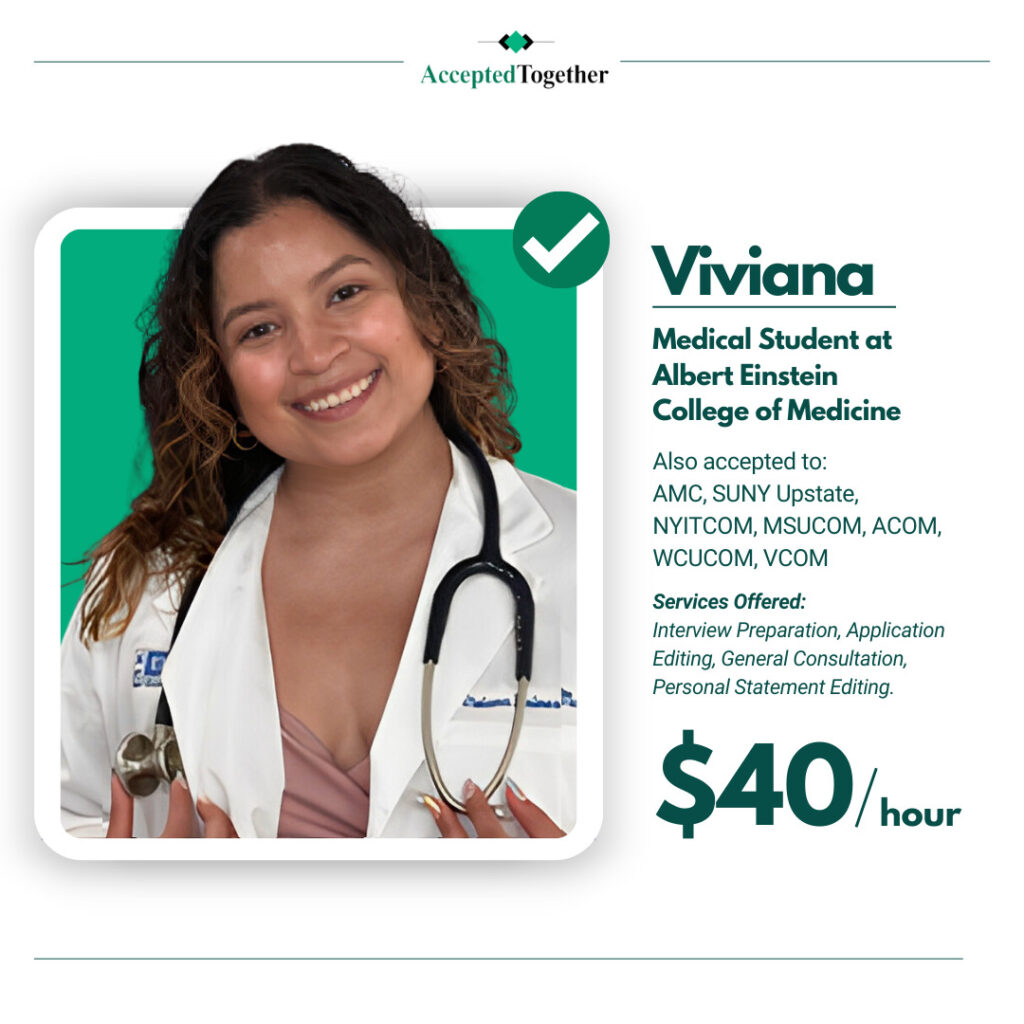
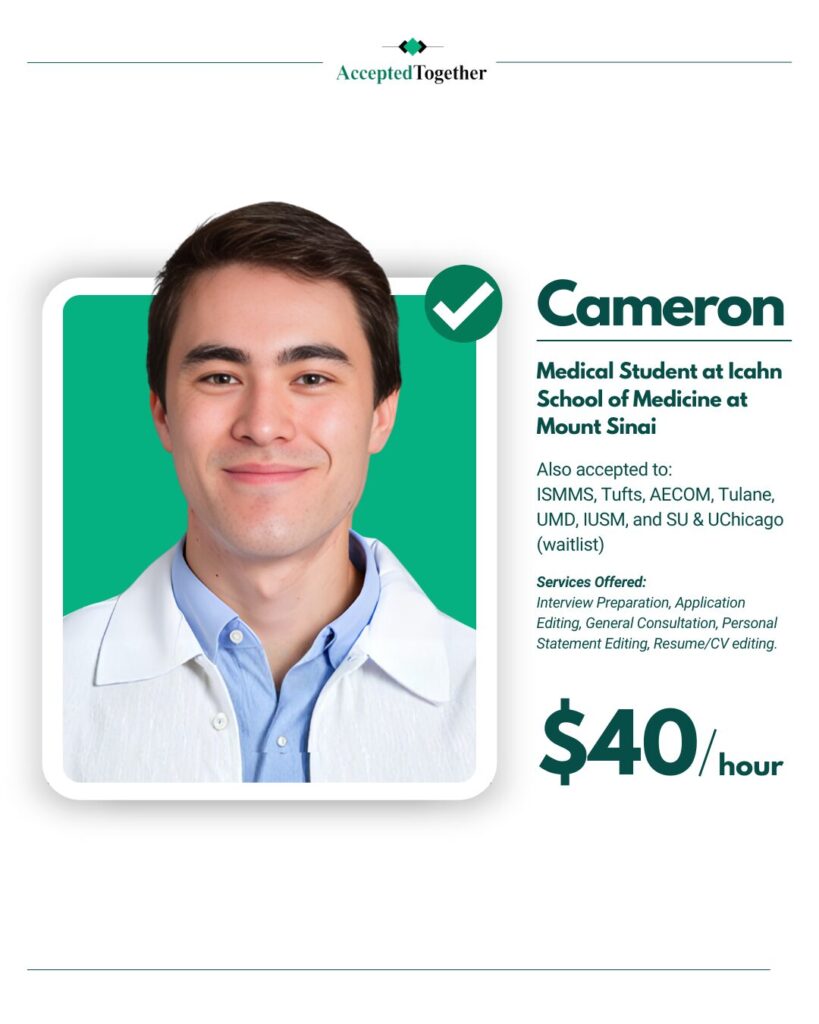
Click To See Hundreds Of Consultants Who Can Mentor You:
Curriculum & Program Structure
Program Duration and Structure
Albert Einstein College of Medicine offers a comprehensive 4-year MD program structured around Einstein’s innovative educational philosophy that blends traditional medical education with modern pedagogical approaches.
Program Timeline:
- Years 1-2: Pre-clinical curriculum focusing on foundational sciences
- Years 3-4: Clinical rotations and electives
- Integrated Approach: Service learning and research opportunities throughout all four years
Educational Philosophy and Teaching Methods
Core Educational Principles:
- Competency-based learning that emphasizes mastery over time constraints
- Holistic patient care training that considers biological, psychological, and social factors
- Community engagement through service learning initiatives
- Collaborative learning fostered by pass/fail grading system
Teaching Methodologies:
Einstein employs a diverse array of teaching methods including:
- Problem-Based Learning (PBL): Small group discussions focused on clinical cases
- Team-Based Learning (TBL): Collaborative approach to complex medical topics
- Simulation-Based Training: High-fidelity simulations for clinical skills development
- Technology Integration: Digital learning platforms and virtual patient encounters
Pre-Clinical Years (Years 1-2)
Curriculum Structure:
The pre-clinical curriculum covers essential medical sciences through integrated courses that connect basic science concepts to clinical applications.
Assessment Methods:
- Pass/Fail System: Non-competitive grading that promotes collaboration
- Competency-Based Assessment: Focus on mastery rather than peer comparison
- Regular Feedback: Continuous evaluation and support for student development
Research Opportunities:
Students can engage in research during pre-clinical years through:
- Faculty mentorship programs
- Summer research fellowships
- Independent study opportunities
- Einstein-Montefiore research centers
Clinical Training (Years 3-4)
Clinical Rotation Sites:
Students train in diverse healthcare settings including:
- Montefiore Medical Centers: Four centers of excellence
- Community Health Centers: Serving diverse Bronx populations
- Outpatient Clinics: Ambulatory care experiences
- Specialty Care Centers: Subspecialty exposure
Core Rotation Requirements:
All students complete required rotations in:
- Internal Medicine
- Surgery
- Pediatrics
- Obstetrics and Gynecology
- Psychiatry
- Family Medicine
- Emergency Medicine
Geographic Distribution:
Clinical sites are strategically located throughout the Bronx and New York metropolitan area, providing exposure to diverse patient populations and healthcare delivery systems.
Elective Opportunities
Research Electives:
- Scholarly project requirements integrated into curriculum
- Laboratory research in basic sciences
- Clinical research opportunities
- Community-based participatory research
Specialty Exploration:
- Away rotations at other institutions
- International experiences in global health
- Rural medicine exposure programs
- Subspecialty electives in areas of interest
Special Programs and Combined Degrees
MD/PhD Program:
Einstein offers a prestigious Medical Scientist Training Program (MSTP) that combines medical and doctoral education for students interested in physician-scientist careers.
MD/MPH Program:
Students can pursue a Master of Public Health degree concurrent with their MD studies, focusing on population health and health policy.
Other Opportunities:
- Dual degree options in business, bioethics, and clinical research
- Certificate programs in specialized areas
- Leadership development programs
Service Learning Component
Four-Year Service Learning Course:
All Einstein students participate in a mandatory four-year service learning program that:
- Connects students with community organizations
- Addresses health disparities in the Bronx
- Develops cultural competency and social awareness
- Integrates community needs with medical education
Residency Preparation and Outcomes
USMLE Performance:
Einstein students consistently perform above national averages on:
- USMLE Step 1: Pass rates exceed national benchmarks
- USMLE Step 2: Strong performance in clinical knowledge and skills
Residency Match Success:
Recent match results demonstrate Einstein graduates’ competitiveness:
- Match rate: High percentage of students match into their preferred specialties
- Competitive specialties: Strong placement in dermatology, radiology, anesthesiology
- Geographic distribution: Graduates match at prestigious programs nationwide
- Program diversity: Matches span primary care to highly competitive subspecialties
Recent Match Highlights (2023):
- Internal Medicine: 45 students (largest group)
- Anesthesiology: 20 students
- General Surgery: 11 students
- Emergency Medicine: 8 students
- Dermatology: 6 students
- Family Medicine: 4 students
Einstein graduates are well-prepared for residency training and successful medical careers across all specialties and practice settings.
Pre-Medical Preparation
Undergraduate Program Recommendations
Academic Major Flexibility:
Albert Einstein College of Medicine embraces academic diversity, with 27% of students having non-science undergraduate degrees. The school values:
- STEM Majors: Biology, chemistry, physics, biomedical sciences
- Liberal Arts: English, history, philosophy, psychology
- Social Sciences: Sociology, anthropology, economics
- Humanities: Art, music, languages, literature
- Interdisciplinary Studies: Public health, bioethics, global studies
Balancing Requirements:
While Einstein’s competency-based approach is flexible, prospective students should ensure they develop:
Cultural competency through diverse academic and social experiences
Scientific literacy through coursework or research
Critical thinking skills across multiple disciplines
Communication abilities through writing and presentation experiences